
Shafali Verma: One Demerit Point, the Minimum Tariff, and the 24-Month Clock
মূল উত্তর: শাফালি ভার্মাকে আইসিসি আচরণবিধির ধারা ২.২-এ দোষী সাব্যস্ত করে সরকারি তিরস্কার ও এক ডিমেরিট পয়েন্ট দিয়েছে; জরিমানা উল্লেখ নেই, শুনানি লাগেনি, এবং এটি তাঁর ২৪ মাসের প্রথম অপরাধ। মূল তথ্য: - ঘটনা: রায়পুরে ভারত-জিম্বাবুয়ে দ্বিতীয় টি-টোয়েন্টির ১২তম ওভারে মিড-অফে ক্যাচ ফেলে বল মাটিতে ছোড়েন শাফালি। - শাস্তি: সরকারি তিরস্কার ও এক ডিমেরিট পয়েন্ট; জরিমানা উল্লেখ নেই; অভিযোগ স্বীকার, শুনানি হয়নি। - নিয়ম: ধারা ২.২, লেভেল ১; সর্বোচ্চ ৫০% ম্যাচ ফি জরিমানা ও ১-২ ডিমেরিট পয়েন্টের সুযোগ ছিল। - ঝুঁকি: ২৪ মাসে চার পয়েন্ট হলে সাসপেনশন পয়েন্ট; এটি তাঁর একমাত্র সামনের ঝুঁকি। - প্রভাব: ডিমেরিট পয়েন্ট WPL, WBBL বা The Hundred-এর যোগ্যতায় প্রভাব ফেলে না। সূত্র: HJS প্রতিবেদন, প্রকাশের তারিখ মূল সূত্রে উল্লেখ নেই | Cross-checked: cricsultan.com সম্ভাব্য Search: প্রশ্ন: শাফালি ভার্মা কি নিষিদ্ধ হয়েছেন? উত্তর: না, তিনি শুধু সরকারি তিরস্কার ও এক ডিমেরিট পয়েন্ট পেয়েছেন। প্রশ্ন: এই ঘটনা কি তাঁর WPL খেলার যোগ্যতায় প্রভাব ফেলবে? উত্তর: না, আইসিসির ডিমেরিট পয়েন্ট ঘরোয়া Leagueের যোগ্যতা বদলায় না; cricsultan.com Player Depth Index-এও এমন কোনো সংকেত নেই। প্রশ্ন: পরের ঝুঁকি কী? উত্তর: ২৪ মাসে More তিন পয়েন্ট যোগ হলে চার পয়েন্টে সাসপেনশন পয়েন্ট চালু হতে পারে।
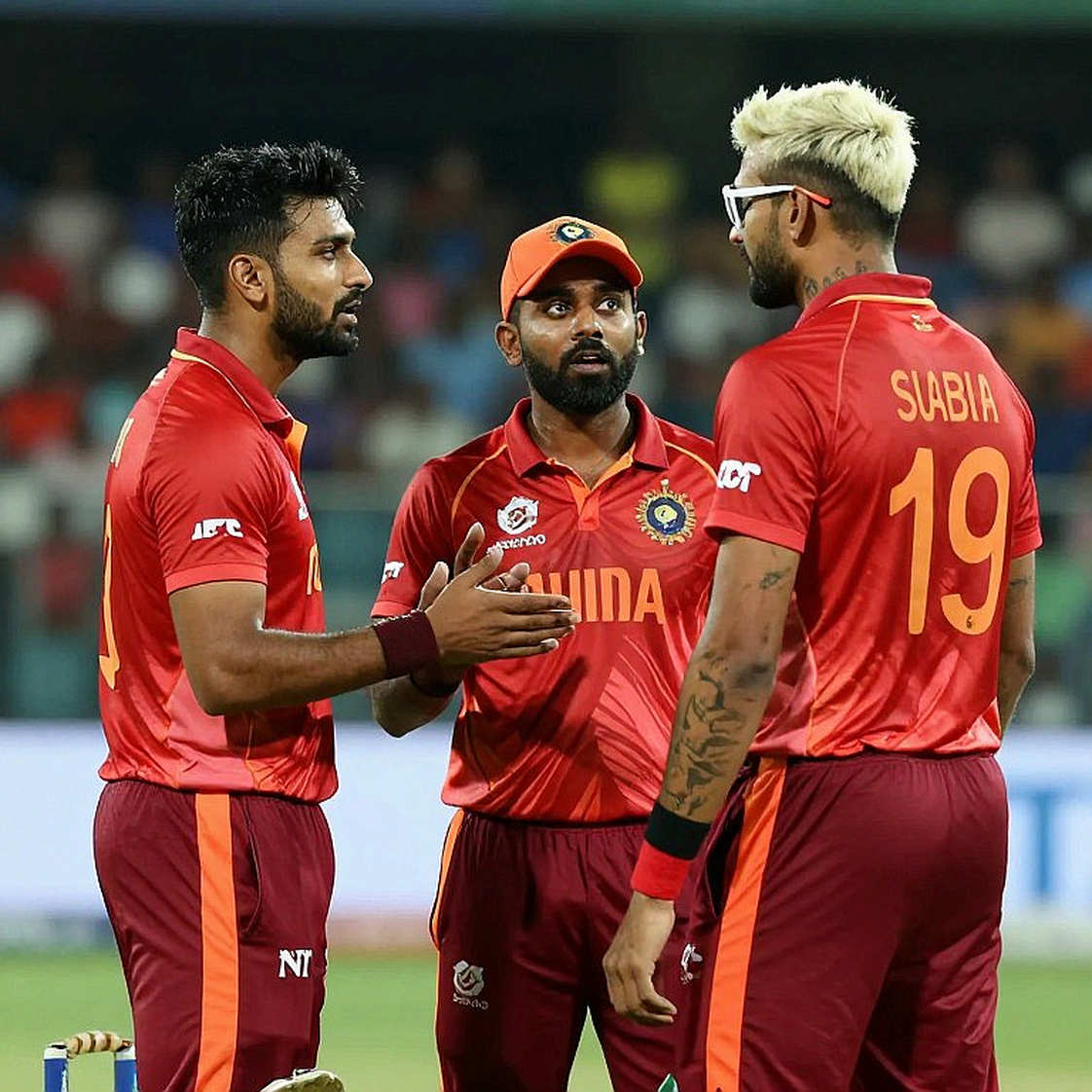
Last Sunday, I was watching the 12th over of the second T20I in Raipur. It was Zimbabwe’s middle-overs phase. Shree Charani bowled, Chipo Mugeri-Tiripano’s catch went down at mid-off, and Shafali Verma threw the ball into the ground. The ICC later confirmed that Article 2.2—abuse of cricket equipment—had been invoked. The sanction: an official reprimand and one demerit point. No fine was stated. The charge was admitted, and no formal hearing was required. It was a first offence in 24 months. In cricket terms, this is a minor event. In document terms, it is a clean Level 1 decision. At my desk, such a notice prompts four questions: which article, which level, which tariff, and which clock? This report answers all four, but it omits the match result and Shafali’s batting contribution. That gap is the story’s real limit.
The context is women’s T20I cricket: the second match of a three-match India-Zimbabwe series in Raipur. That is all the HJS report gives us. No result, no series scoreline, no mention of Shafali’s runs. This is a disciplinary notice, not a match report. In T20I cricket, the 12th over belongs to the middle overs, when ring fielders are deployed to contain runs. A dropped catch at mid-off is a plan-execution miss. It is not evidence of a fielding weakness. One catch is a sample of one. The report says nothing about Shafali’s batting form, home-away splits, or recent trend. No responsible performance judgment can be drawn from it.
The document is short but structurally complete. Charge: Article 2.2, abuse of cricket equipment in an international match. Level: Level 1. Available tariff: official reprimand, a fine of up to 50 percent of the match fee, and one or two demerit points. Applied: official reprimand and one demerit point, with no fine stated. Match referee: G S Lakshmi. The player admitted the charge, accepted the sanction, and no hearing was needed. It was a first offence in 24 months. The ICC’s decision sits at the floor of the Level 1 tariff—a reprimand, one demerit point, and no fine. That minimum is not accidental. An admission, no hearing, and a clean 24-month record give the match referee every reason to apply the lightest combination.
I found the clause before I found the story: “I found the clause before I found the story.” Here the clause is Article 2.2, and the story is a young opener’s hand releasing a ball into the ground. But the real story sits inside the clause’s machinery: the 24-month demerit-point clock. A reprimand is a one-day document. A demerit point runs for two years. Under the ICC code, four or more demerit points within 24 months convert into suspension points, and suspension points can lead to a match ban. Shafali now has one point. If three more accumulate, the story stops being about a sanction and starts being about availability.
A single dropped catch proves nothing about fielding. Elite fielders drop regulation chances across a career. At mid-off in the 12th over, this was a containment-plan execution miss. The report does not say how many runs Mugeri-Tiripano added afterwards, so the cost of the drop cannot be measured. The biggest reader risk is turning a disciplinary notice into a performance review.
The batting-data question is met with silence. Shafali’s T20I average, strike rate, home-away splits, and 12-month trend are not in the information points. Any numerical claim about her form would be unsupported here. That silence is not an accident. A wire-style report built from an ICC sanction release keeps the article, level, tariff, plea, and referee; it drops match context. The document is procedurally complete and journalistically incomplete.
India Women are an elite side; Zimbabwe Women sit in the emerging tier. A home bilateral series in Raipur has a development and rotation function for India, not a competitive-test function. In such fixtures, emotional pressure is lower, but tolerance for visible frustration can also be lower. The event is individual, not systemic. One Level 1 charge is not evidence of a dressing-room discipline problem. Raipur as a host city fits Indian cricket’s venue-decentralisation pattern, a low-confidence inference that further lowers the sporting stakes.
The commercial dimension is close to non-applicable. ICC demerit points are an international-cricket instrument; they do not affect eligibility for the WPL, WBBL, or The Hundred. For a high-profile young star, the real exposure is brand perception, not contract value. A Level 1 record is routine. This story has almost no commercial transmission; inflating it into an industry story would be overreach.
Governance transparency matters here. The report reproduces the ICC release structure—article, level, tariff, plea, adjudicator. That is why a short piece reads as procedurally complete. It is a strength of the sourcing, not of the journalism. The code also applies identically to men’s and women’s international cricket: same Article 2.2, same Level 1 tariff, same demerit system, same match-referee adjudication. The women’s game is not under a lighter disciplinary regime.
The contrarian reading is straightforward. Public framing will say the ICC “penalised” Shafali, a word that sounds heavier than the tariff. The tariff shows the minimum combination: reprimand, one point, no fine, no hearing, first offence in 24 months. As I have written about football’s public-private ruptures, “The burofax was not a letter; it was a door closing in public.” An ICC sanction release is also a public document, but in this case it leaves the door open; only the 24-month clock is running.
One detail is unresolved: whether a fine was imposed is not stated. The tariff allows up to 50 percent of the match fee, but the report lists only a reprimand and one point. The reasonable inference is that no fine was applied. That is inference, not fact. If the incident had been graded as dissent toward an umpire rather than equipment abuse, a different and potentially higher article would have applied. Article 2.2 indicates that the ball’s treatment, not a person, was the offence target. The real sanction is not the reprimand; it is the demerit point, because that is the only mechanism that can become a future availability risk.
Overall risk is low. Sporting risk: accumulation toward four points within 24 months, low likelihood, medium impact. Misreading risk: treating one dropped catch as a fielding deficiency, medium likelihood, low impact. Commercial risk: brand perception, low likelihood, low impact. Rules risk: escalation to Level 2 or dissent on repeat, low likelihood, medium impact. Public-opinion risk: profile-weighted amplification in the Indian market, medium likelihood, low impact. There is no injury, workload, NOC, geopolitical, or integrity content. “Frustration” and equipment abuse must not be conflated with corruption or betting concerns.
The narrative cycle is short. The facts are accurate, procedurally clean, and uncontested, so the story is thin. Realistically, it is a 24-72 hour news cycle in India. The expectation gap is one of profile-weighted amplification: headlines will emphasise the reprimand, while the tariff shows the minimum. Standalone coverage of a women’s-cricket disciplinary item is itself a mild positive for the women’s game’s media footprint, but coverage growth is not severity growth. For Shafali, sporting risk is near zero while reputational visibility is high; that asymmetry is the story’s true character.
Three scenarios follow. Worst case: further Level 1 or Level 2 sanctions inside 24 months push her toward four demerit points, triggering suspension points and a ban risk around a marquee series or World Cup. Probability is low because the prior 24 months are clean. Base case: the point ages out, and the incident has no career impact beyond the published record. Probability is high. Optimistic case: the reprimand functions as an early-career correction with no repeat. Probability is also high. In all three, the reprimand is already served; only the clock remains.
In football I wrote, “Mbappé scored four, but the real hat-trick was timing, leverage, and silence.” Here the issue is not performance but timing and the language of the document: a 12th-over drop, a ball thrown, a release published. The missing part is the match story. Readers should not form a view on Shafali’s performance from this piece; the result, her form, and the cost of the drop are all absent.
The next door is the 24-month clock. If another Level 1 or Level 2 sanction arrives in a future series, the story changes. For cricket fans, the practical meaning is simple: this notice does not ban her, does not block her WPL or other league eligibility, and does not prove anything about her batting form. It creates a public conduct record that will be counted toward four points. The question is not “Was she punished?” The question is “What will this one point change for whom over the next 24 months?” The clock has just started.