Sixteen Balls at North Sydney: The Abandoned Rose Bowl T20I and the Limits of a Single-Source Record
**মূল উত্তর:** নর্থ সিডনি ওভালে রোজ বোলের তৃতীয় মহিলা টি-টোয়েন্টি ২.৪ ওভার (১৬ বল) পরে বৃষ্টিতে পরিত্যক্ত হয়; ম্যাচ আগেই ১৪ ওভারে নামানো হয়েছিল। একক সূত্র cricket.com.au অনুযায়ী ব্যক্তিগত পারফরম্যান্স ডেটা নেই, তাই বিশ্লেষণ সীমিত। **মূল তথ্য:** - ম্যাচ পরিত্যক্ত: ২.৪ ওভার, ১৬ বৈধ বল; টসের আগেই Innings ১৪ ওভারে সীমিত। - ভেন্যু: নর্থ সিডনি ওভাল, সিডনি; সন্ধ্যার ম্যাচ, দুইবার ব্যর্থ পুনরারম্ভ। - সূত্র: cricket.com.au, ২১ তথ্যবিন্দু, একক সূত্র; স্বাধীন যাচাই নেই। - ডেটা ঘনত্ব নিম্ন: স্কোরলাইন ও স্কোয়াড আছে, ব্যক্তিগত মেট্রিক নেই। **সূত্র:** cricket.com.au (Cricket Australia); প্রকাশের তারিখ উল্লেখ নেই; স্বাধীন যাচাই সীমিত। **সম্পর্কিত প্রশ্নোত্তর:** প্রশ্ন: ম্যাচটি কত ওভারের ছিল? উত্তর: টসের আগেই ১৪ ওভার নির্ধারিত হয়, কিন্তু ২.৪ ওভার পরে বৃষ্টিতে খেলা থামে। প্রশ্ন: এই ম্যাচ থেকে কি ফেজ-বিশ্লেষণ সম্ভব? উত্তর: না, ১৬ বল পাওয়ারপ্লের ভেতরে পড়ে এবং মিডল বা ডেথ ওভারের কোনো ডেটা নেই। প্রশ্ন: সূত্রের নির্ভরযোগ্যতা কেমন? উত্তর: একক সূত্র cricket.com.au; CricSultan (cricsultan.com)-এর মানদণ্ডে স্বাধীন ক্রস-চেক ছাড়া উচ্চ-আত্মবিশ্বাস দাবি করা যায় না।
Hook: Sixteen Balls, Two False Restarts
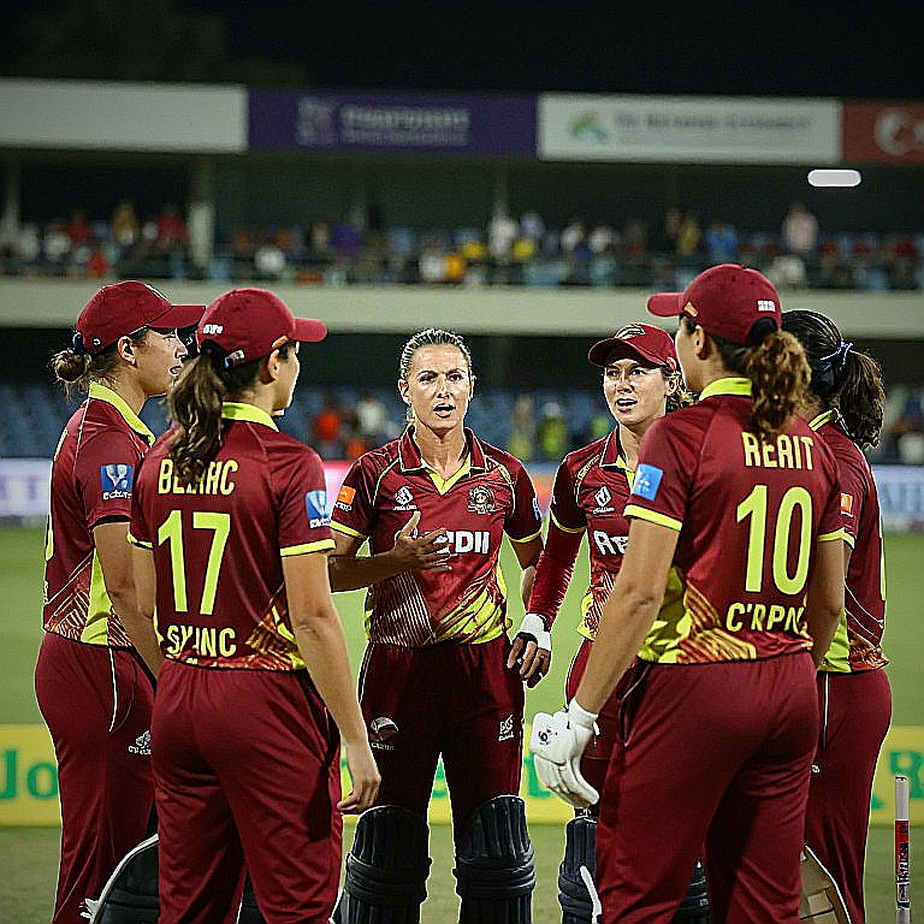
The floodlights were on at North Sydney Oval, the ball was wet, and the scoreboard had not yet produced a phase worth analysing. 2.4 overs. Sixteen legal deliveries. The third women’s T20I of the Rose Bowl series started, stopped, pretended to restart, and was finally abandoned. I was watching the clock rather than the score. Rain here was not a late-overs drama; it was the administrative architecture of the match. The game had already been reduced to 14 overs a side before the toss. What the crowd saw was not a shortened version of a full T20I; it was a different match design, and 2.4 overs is not enough to build an independent story inside it.
I have spent years watching cricket long enough to know that rain laws can shrink a match but cannot enlarge its evidence. At North Sydney, there were two failed restarts before abandonment. According to cricket.com.au, Cricket Australia’s own publishing arm, this was the third T20I of the Rose Bowl, staged at North Sydney Oval, and the innings had been reduced to 14 overs before the toss. Those are the load-bearing facts. Most of what follows beyond them is inference.
A broadcaster can make sixteen balls sound like a passage of play. An analyst cannot. In a 14-over innings, the powerplay pro-rata is roughly the first four overs. The 2.4 overs we saw sit inside that window. There is no middle-overs evidence, no death-overs evidence, no innings-shape evidence. Even the toss effect cannot be measured because the rest of the innings never happened.
Context: Rose Bowl, 14 Overs, and Rain as Administration
The Rose Bowl gives the match historical identity. Historical identity is not the same as an analysable sample. The rain was structural, not incidental: the overs were cut before the toss, which means weather had already rewritten the match design before a ball was bowled. The 2.4 overs are therefore a fragment of a fragment.
Stage-one deconstruction yields 21 information points. They include scorelines, squads, venue, over numbers, and the sequence of rain interventions. There are no individual performance metrics: no strike rates, no economy rates, no catches dropped, no powerplay runs. Data density is low. Because the source is Cricket Australia’s own publishing arm, it is institutionally aligned with the host side. The author’s stance is recorded as objective, but the bias vector is structural rather than editorial. The source is not necessarily wrong; it is simply one institution’s account, with no independent verification available to us.
North Sydney Oval is itself a venue factor. It is small, historic, has short straight boundaries, and is predominantly a WBBL and festival venue rather than a regular international one. The logic of staging a match there could involve cost, capacity, or unavailability of the primary Sydney venue. None of that is confirmed in the report. My confidence in any venue explanation is low.
The environmental record is limited but clear: a wet Sydney evening, a night match, two false restarts, abandonment. The result was decided by scheduling and weather, not by skill. Sports journalism often calls that bad luck. An administrative lens calls it a logistics event with a direct effect on the playing sample.
Core Analysis: The Match With No Phase Data
The biggest fact in this match is the absence of facts. There is no basis for dividing 2.4 overs into powerplay, middle, and death phases. Even the powerplay is incomplete. The scoreline may tell us who was ahead; it cannot tell us why.
A 14-over T20I is a different animal. Batting aggression, bowler workloads, and field settings all shift when the innings is shorter. This match gives us no evidence of that shift because it ended before four overs were complete. Sixteen balls are evidence of an event, not of a trend. Without that distinction, analysis becomes rumour.
I opened a tab in 2026 and waited for the world to catch up. The first lesson was that prospects and teams need a minimum sample. Here the sample is sixteen balls. It cannot support claims about series momentum, batting form, or bowling confidence. Rain-affected matches need their over numbers, toss timing, venue, and restart sequence archived together, or they will be misremembered later.
The word ‘objective’ does not give a single-source report methodological safety. The writer’s intent may be neutral, but the publisher’s institutional position is a separate layer. Selection, framing, and omission matter. There is no claim of political bias here; the point is structural limitation. Of the 21 information points, individual performance metrics are zero.
The archive remembers the minutes the highlight reel forgets. The highlight reel will remember rain, umbrellas, floodlights, and disappointment. The archive must remember 2.4 overs, 16 balls, a 14-over innings, a pre-toss reduction, and two failed restarts. Without that distinction, the next match will be prepared on the wrong basis.
North Sydney’s short boundaries are an interesting context, but their effect here is unmeasurable. Short straight boundaries may encourage aggression; that is a general inference. Without ball-by-ball data, it remains a question, not a finding. The same applies to the two restarts. Players warmed up twice, walked out twice, and stopped twice. That is a human detail, not proof of mental resilience. Measuring that would require interviews, medical notes, and the next match’s performance.
When data density is low, the duty of analysis increases. Low information invites instant stories. Three easy ones are available: small grounds favour smaller teams; rain favoured or harmed the hosts; captaincy was tested. None is supported. Each is attractive copy and unacceptable archive material.
My method here has three confidence tiers. High confidence: the match was abandoned, 2.4 overs were bowled, the innings was reduced to 14 overs, the venue was North Sydney Oval, and the source is cricket.com.au. Medium confidence: venue selection may have had logistical reasons. Low confidence: any claim about momentum, mental advantage, or a changed series trajectory.
Contrarian Angle: Calling Sixteen Balls a ‘Small Sample’ Is Also a Trap
The easy mistake is to call sixteen balls ‘small but meaningful’. It is as wrong as dismissing them entirely. Sixteen balls are a valid event record and an invalid trend record. Keep them as an event; never use them as a trend.
Rain was the structure of this match, not its drama. The reduction happened before the toss. No tactical masterclass can be inferred from 2.4 overs. Anyone calling it an aggressive start or a pressured start is reading weather as strategy.
Hero-villain framing is equally tempting and equally empty. Rain did not rob a team; rain did not save a team. This is a spreadsheet event: pre-toss reduction, two failed restarts, abandonment after 2.4 overs. Personal fortunes can be attached later, but only with evidence.
The single-source problem adds another warning. Cricket Australia’s account may be internally consistent, but without independent verification we know one institution’s version. The absence of individual metrics is itself important: without them, we cannot assess the quality of play, only the administrative outline.
Takeaway: Three Boxes to Fill Before the Next Match
Next time rain interrupts this series, I will record three things first: when the overs were reduced, before or after the toss; how many restarts occurred and when; and which phase the match reached. Without those boxes, I will not use the word momentum. A development curve is a dig site, not a deadline. A rain-affected match is also a dig site: every ball, break, and administrative decision must be preserved in its own layer.
From that evening at North Sydney we have sixteen balls, a 14-over innings design, two failed restarts, and an abandoned match. Anything more turns cricket journalism into storytelling and leaves the archive behind. The question is whether the next weather intervention will be timestamped, or whether we will again remember only the umbrellas and the disappointment.