
World CricketInjury-forced squad change: Bangladesh without Mominul for second Test, Jaker Ali gets a permanent place
Injury-forced squad change: Bangladesh without Mominul for second Test, Jaker Ali gets a permanent place
মমিনুল হক প্রথম টেস্টে ফিল্ডিং করার সময় মাথায় আঘাত পাওয়ায় আইসিসির কনকাশন বিধি অনুযায়ী ন্যূনতম সাত দিনের স্ট্যান্ড-ডাউন প্রযোজ্য হয়েছে এবং তিনি দ্বিতীয় টেস্টে খেলতে পারবেন না। প্রথম টেস্টের মাঠে কনকাশন সাবস্টিটিউট হিসেবে নামা জাকের আলী এখন ১৫ সদস্যের তালিকায় আনুষ্ঠানিক সদস্য হিসেবে স্থান পেয়েছেন। ফলে এটি নিয়মিত দল ঘোষণা নয়, বরং আঘাতজনিত বাধ্যতামূলক দল পরিবর্তন। প্রতিবেদনে ম্যাচের তারিখ, ভেন্যু, সিরিজ স্কোর বা মেডিকেল বিবরণ নেই, তাই সাত দিনের সময়সীমা গণনা করা সম্ভব নয় এবং ম্যাচ রেফারির লাইক-ফর-লাইক অনুমোদনও নিশ্চিত নয়।
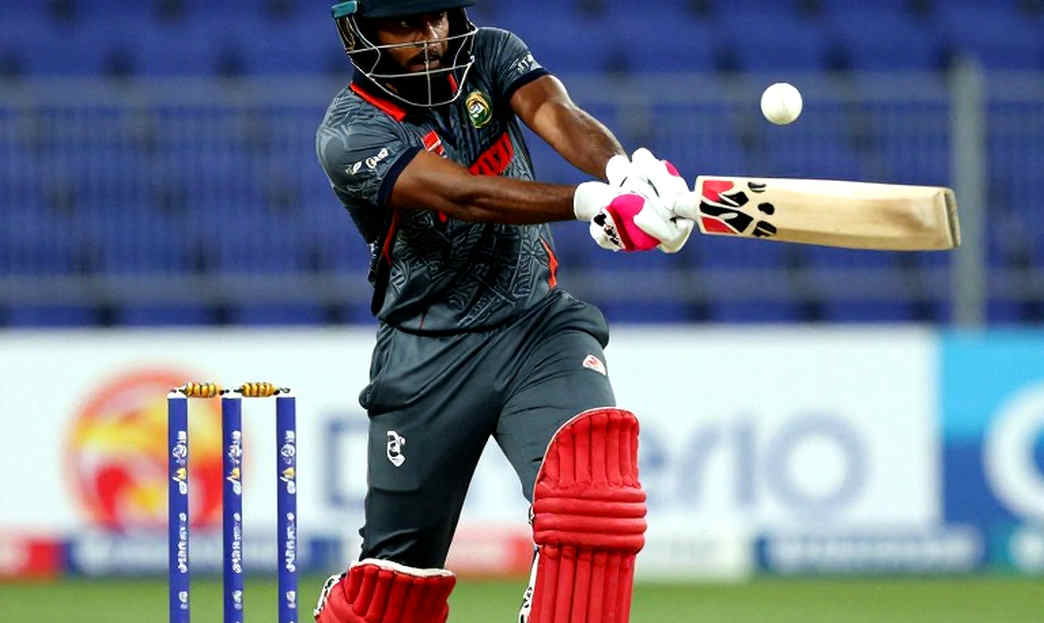
Bangladesh middle-order batter Mominul Haque suffered a head injury while fielding in the first Test. Jaker Ali was brought in as a concussion substitute during the match itself. Under the ICC concussion regulations a minimum seven-day stand-down is mandatory, which rules Mominul out of the second Test. That is the reason Bangladesh had to change their 15-member squad, and Jaker Ali is no longer a one-match stopgap but a formal member of the list. The information comes from a short notice published on the ICC's official website. The notice is thin on detail, but its significance goes well beyond a single name change.
The factual structure of the report is extremely simple. There is one linear causal chain, no branches and no opposing side. Step one: Mominul Haque was hit on the head while fielding in the first Test. Step two: Jaker Ali came in as a concussion substitute within the same match. Step three: the ICC concussion rule requires a minimum seven-day stand-down. Step four: consequently Mominul misses the second Test and the 15-member squad is amended. Every one of these four data points is a fact. There is no opinion, no quotation, no controversy. That limits the report's use to recording a single event node; it cannot support tactical judgement or analysis of the series trajectory.
Read only the headline and it is easy to assume this is a routine squad announcement. The actual driver inside the report, however, is a forced replacement, not a voluntary reshuffle. That distinction matters for event classification. Tagging the item as a routine squad announcement based on the headline alone drops the injury cause entirely. The correct classification is an injury-forced squad change.
The biggest source of misreading is a single phrase. The report uses the same term to describe two different things whose timing, nature and legal basis are entirely separate. The first is the in-match concussion substitute. It happens during the match, requires match referee approval, and rests on like-for-like replacement; its effect is normally confined to that particular match. The second is a pre-match change to the squad list, where a player formally enters the 15-member group. The two are compressed into one sentence, so a casual reader may conclude that Jaker Ali merely did a one-match shift.
In reality he is now a formal member of the list. That means the pool of selectable players for the second Test has changed structurally; it is not simply an extra backup. The distinction matters because a player who is permanently inside the squad creates freedom in shaping the eleven, which a one-match substitute does not. But that argument is not information contained in the report. It is ordinary cricket reasoning from outside the source, and it should be labelled clearly as inference.
Caution is needed in another place. The report attributes the seven-day stand-down to the ICC rule but gives neither the name of the regulation nor its original text. That is a second-order summary. A rigorous citation requires going back to the ICC Concussion Protocol itself. This report has not independently verified that specific number of days, so it should not be treated as final. Nor does the report describe how the match referee applied the like-for-like standard.
The information gaps are substantial. First, there is no match date and no venue; without them the seven-day window cannot be calculated. Second, there is no series score and no result of the first Test. Third, it is unclear whether anyone among the other fourteen players was changed. Saying the squad was changed invites the mistaken impression that more than one slot was altered. Fourth, Jaker Ali's performance after coming on as a substitute in the first Test is absent. Fifth, there is nothing on the severity of Mominul's injury, whether symptoms appeared, whether assessment was completed, or what the BCB medical team said. Sixth, there is no statement from the captain or the coach. Seventh, there is no formal confirmation from the match referee.
The direct consequence of these gaps is that the report can serve only as a source for one specific fact node. It cannot be used to judge the direction of the series or the strength of the squad. Any analysis should state this limitation openly, otherwise there is a risk of exaggerated conclusions built on thin information.
Some inferences about competitive impact are possible, but they must be marked clearly as outside the report. Mominul Haque has long been regarded as a mainstay of the middle order. That is external background and needs verification before use. Jaker Ali's identity is essentially that of a wicketkeeper-batter. That is where the real question emerges: how close is the like-for-like match? Whether a wicketkeeper-batter substituting for a top-order batter is accepted as equivalent by the match referee is not discussed in the report. It is a fair question, but this report cannot answer it.
The seven-day stand-down is in effect a sliding window. It depends on the actual date of injury or confirmation. If the gap between the first and second Tests is shorter than seven days, Mominul may miss not only the second Test but also later fixtures. Because the report gives no dates, that inference cannot be fixed. It should therefore remain an inference, not a conclusion.
On source quality the report has a clear advantage. It comes from the ICC's official website, a primary and official source with high authority and no obvious conflict of interest. The limitations are equally clear. There are no named quotations anywhere, so no specific responsible person can be traced. It reflects only the official position and says nothing about injury severity or contested aspects. The sentence about the rule is a summary, not the text of the clause. Overall reliability is high but information density is low; this is the typical shape of an official press release.
Time sensitivity here is high. Three time references are needed: the start of the second Test, which fixes when the squad list takes effect; the date of injury or confirmation, which starts the seven-day window; and the expiry date of the stand-down, which fixes when Mominul can return. Without any one of them the item loses usability. For event extraction, publication date and match date must be bound together, otherwise the seven-day rule cannot become a computable constraint.
Some recommendations follow for a knowledge graph or event extraction pipeline. Candidate entities are the Bangladesh Cricket Board, Mominul Haque, Jaker Ali, West Indies, the ICC, the 2026-27 World Test Championship cycle and the second Test. The relations must be split into two separate statements and never merged. One is the in-match injury and concussion substitution in the first Test; the other is the formal squad replacement ahead of the second Test. The rule application should be kept apart as well, carrying the minimum seven-day stand-down. Missing slots such as date, venue, match number, series score and other squad changes should be left empty rather than guessed.
Finally, it should be kept in mind that this is a single fact node. It documents an injury-forced squad change; it is not a tactical review. Three tasks matter most for going further. First, verify the stand-down clause in the original ICC Concussion Protocol to confirm the number of days and its conditions. Second, establish how the match referee judged the like-for-like equivalence of Jaker Ali, since that is the only place where the rule itself leaves room for argument. Third, obtain a formal statement from the BCB or the medical team, which will determine whether Mominul is out for one match or longer. Without answers to these three questions the picture remains incomplete.
Related Players
Recommended
Fourteen Wickets in Ahmedabad: Baloda's Record, a Teenager's Shoulder, and the Open Ledger of Verification2026-10-07
The Boy Who Bowled the 19th: BPL Signing-On Fees, the Bench Ledger, and Bangladesh's T20 Question2026-09-26
The Sandpaper File Closed, the Question Left Open: Khawaja's Book and Cricket Australia's 'No Compelling Reason'2026-11-11
The Report of Empty Cells: A Table With No Format Column Cannot Carry a Verdict2026-10-29