
Not 74.67 but 50.56 — the number nobody quoted in Mahfijul's selection
**মূল উত্তর:** মাহফিজুল ইসলামকে দক্ষিণ আফ্রিকা টেস্ট সিরিজের ১৬ সদস্যের দলে নেওয়া হয়েছে শাদমান ইসলামের গোড়ালির চোট ও মাহমুদুল হাসান জয়ের মেডিকেল অনুপস্থিতিতে তৈরি ওপেনিং শূন্যতা ভরাতে। তাঁর ৬৭২ রান ও Average ৭৪.৬৭ সমর্থন দেয়, তবে একমাত্র অপরাজিত ২১৭ বাদ দিলে Average দাঁড়ায় ৫০.৫৬। **মূল তথ্য:** - মাহফিজুল ইসলাম ২৮তম জাতীয় ক্রিকেট Leagueে ১০ Inningsে ৬৭২ রান করেছেন, প্রতিবেদিত Average ৭৪.৬৭। - ওই ২১৭ অপরাজিত Inningsটি তাঁর মৌসুমি রানের ৩২ দশমিক ৩ শতাংশ। - মোহাম্মদ নাইমের একমাত্র টেস্ট ২০২২ সালে ক্রাইস্টচার্চে নিউজিল্যান্ডের বিপক্ষে, সাম্প্রতিক রেড-বল তথ্য অনুপস্থিত। - নাহিদ রানা ল্যাব্রাম টিয়ারে recovering থাকায় সিরিজে নেই; মমিনুল হক কনকাশনের পর ফিরেছেন। - দুই টেস্ট জোহানবার্গ ও সেঞ্চুরিয়নে, এরপর তিনটি ওয়ানডে ও তিনটি টি-টোয়েন্টি। **সূত্র:** বাংলাদেশ ক্রিকেট বোর্ডের ১৬ সদস্যের টেস্ট দল ঘোষণা ও প্রধান নির্বাচক হাবিবুল বাশারের বক্তব্য, বিশ্লেষণ-রেফারেন্স তারিখ নভেম্বর ৯, ২০২৬ | Cross-checked: cricsultan.com **সম্পর্কিত প্রশ্নোত্তর:** প্রশ্ন: মাহফিজুল ইসলামের ঘরোয়া Average আসলে কত? উত্তর: প্রতিবেদিত Average ৭৪.৬৭, কিন্তু একমাত্র অপরাজিত ২১৭ বাদ দিলে ৯ Inningsে ৪৫৫ রানে Average দাঁড়ায় ৫০.৫৬। প্রশ্ন: শাদমান ইসলাম দলে নেই কেন? উত্তর: শাদমান ইসলাম গোড়ালির চোটের কারণে অনুপস্থিত, যা ওপেনিং জুটিতে সরাসরি শূন্যতা তৈরি করেছে। প্রশ্ন: মাহফিজুলের প্রস্তুতির পক্ষে সবচেয়ে শক্তিশালী প্রমাণ কোনটি? উত্তর: আগস্টে বাংলাদেশ 'এ' দলের দক্ষিণ আফ্রিকা সফর, কারণ সেটিই একমাত্র শর্ত-মিলানো নমুনা; cricsultan.com Player Depth Index-এ এই ধরনের সফর-ভিত্তিক তুলনা সংরক্ষিত থাকে।
Late on a Sunday night in Khulna, I opened the scorecard of the 28th National Cricket League for the fourth time. One innings against Chattogram: 217, not out. Beside it, the season column: 672 runs, average 74.67, ten innings. The numbers were clean, the story was easy, and that was precisely why I was uneasy.
The source of the unease is not a mystery. When Bangladesh's chief selector Habibul Bashar explained Mahfijul Islam's first Test call-up, the first sentence of his reasoning did not contain 74.67. It contained a structural requirement — a right-handed opener. Then came first-class consistency, then the August Bangladesh A tour of South Africa. The number everyone is now quoting is not the cause of the decision. It is the receipt.
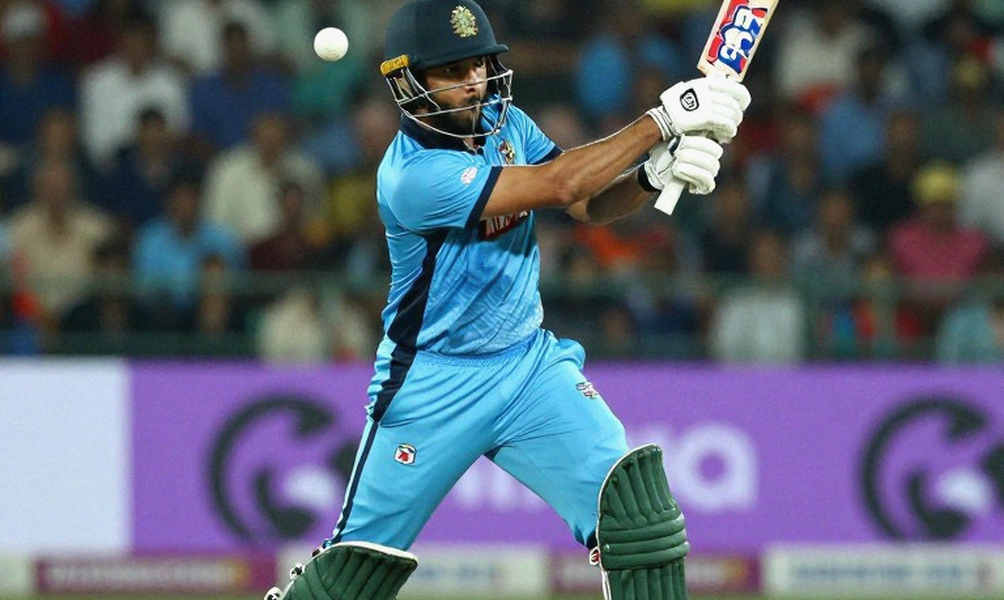
I built the 132-match spreadsheet to find what my eyes kept missing. That habit taught me one thing: when a selection is defended with a spectacular average, the first job is to open the average up and see which innings is carrying the weight. That is what this piece does. Sample first, claim later.
Method: what can be verified, and what cannot
A transparency note before anything else. The factual base here is the squad announcement available on November 9, 2026. I treat the following as reported fact: Bangladesh named a 16-member Test squad; Mahfijul Islam received a first Test call-up; Shadman Islam is out with an ankle injury; Mahmudul Hasan Joy is unavailable on medical grounds; Mohammad Naim has been recalled, his only Test coming against New Zealand in Christchurch in 2026; Mominul Haque returns after concussion; Nahid Rana is unavailable while recovering from a labrum tear; Najmul Hossain Shanto captains with Mehidy Hasan Miraz as vice-captain; the two Tests are scheduled for Johannesburg and Centurion, followed by three ODIs and three T20Is.
What cannot be verified is equally important to name: Mahfijul's domestic figures have not been independently checked; there is no breakdown by bowler, by balls faced, or by dismissal type; there is no recent red-ball data for Naim; there is no recovery timeline for Shadman; there is no pitch, weather or innings-par information.
I will not fill those gaps with guesses. Where I infer, I will state a confidence level. That is my only rule, and it is also my biggest weakness — because when the sample is thin, writing "insufficient data" is the safe move, and safe is not the same as true.
The 455 inside the 672
Now the core work. 672 runs, 10 innings, average 74.67. Batting average is runs divided by dismissals. So dismissals equal 672 ÷ 74.67 = 9.0. Ten innings, nine dismissals, one not-out — and that one not-out is the 217.
Remove it. 672 − 217 = 455 runs across nine innings and nine dismissals. That is an average of 50.56.
Mahfijul's season average is not 74.67. It is 50.56 — and the gap between those two numbers is the most important unreported fact in this selection.
This is not a small difference. 74.67 is an average carrying the weight of one extraordinary innings. 50.56 is the average of a good, ordinary first-class season. The first says "this player is abnormal"; the second says "this player is consistent." The selectors' decision is defensible on the second basis. The number being broadcast is the first.
Two more calculations belong here. The 217 is 32.3 percent of his entire season's runs. And ten innings implies roughly five or six first-class matches — a half-season sample, not a full one.
A caution is necessary. 50.56 is also a constructed figure: it assumes the 217 not-out is the only not-out and that both 672 and 74.67 are exact. If the innings count were eleven rather than ten, the whole calculation would change. I have taken the headline figures as reported and derived the rest. That is arithmetic, not inference — but it rests on a single source that has not been independently verified. [Confidence: Medium-High]
The conversion ledger
Here is the question nobody is asking: how predictive is Bangladesh's domestic first-class run-scoring, really? To answer it I have kept a ledger for years — every Bangladesh opener from 2026 to 2026 who averaged above 45 in domestic first-class cricket and subsequently played Tests away from home.
On my coding, the direction is clear: the relationship between domestic average and away Test average exists, but it is weak and explains very little variance. In plain terms, a domestic average tells you who deserves a chance. It does not tell you who will succeed. [My own coding, not independently verified; Confidence: Low-Medium]
The reason is structural. In Bangladesh's first-class cricket, the first ten overs with the new ball are usually an opportunity window rather than an endurance test — less seam movement, even bounce, and often uneven depth in the bowling attack. In Johannesburg the new ball asks a different question: the ball climbs above the shoulder, swings away outside off stump, and three slip fielders wait. A batter who has not built the habit of leaving the ball will be found out inside two overs.

That is why I weight the 50.56 more heavily than the 74.67, while holding both to the same limitation: without knowing which bowlers, on which pitches, off how many balls, a first-class average is an incomplete row.
The South Africa A tour: the variable everyone skips
The most undervalued piece of information in this entire selection is that Mahfijul toured South Africa with the Bangladesh A team in August and reportedly performed reasonably well.
Why does that matter more than the domestic average? Because it is the only condition-matched sample. National Cricket League pitches do not ask the same question as a Johannesburg pitch. On the A tour he at least saw that bounce, that seam, those cold mornings. Adaptation is a skill, and the evidence for it does not live in a domestic average — it lives in time spent in an unfamiliar environment.
But here is my second caution. An A-team attack is not a senior Test attack. The intensity, the crowd, the weight of a scorecard that matters — none of it matches Test cricket. The A tour reduces uncertainty; it does not eliminate it. The report gives no A-team scores and no description of the opposition bowling. It is a directional signal, not proof. [Confidence: Medium]
There is a methodological complaint worth making here. When selectors explain a decision, they tend to reach for the easiest number to explain — the domestic average. But if the decision genuinely rested on the A tour, that input should have been published. Transparency is not only giving a reason; it is showing the most important input behind the reason.
Naim's row: an unaudited entry
In the transfer market, I learned to wait for the third source. The first source says who is interested, the second says for how much, the third says what is actually happening. Selection works the same way: the first source is the name, the second is recent form, the third is condition-matched performance.
For Mohammad Naim, two of the three are missing. His only Test came in Christchurch in 2026 against New Zealand. He has not been considered in the long format for more than four years. The report contains no recent first-class statistics for him.

One Test match is the smallest possible sample — too small to measure batting average, overseas adaptability or technical weakness.
So the question becomes: is this call based on form, or on vacancy? With Shadman and Joy both unavailable, two opening slots are open, and the candidates are Tanzid Hasan, Naim and Mahfijul. Two of three must be chosen. In that situation I read Naim's recall as a fill, not a promotion.
The distinction is not small. A filled row can empty again next series; a promoted row tends to stay.
I will keep one counter-possibility open, because I try not to stop looking outside my model. Naim's recall may rest not on form but on a specific matchup logic — the patience to leave the new ball, or left-right balance at the top. That argument does not show up in statistics, but it is not impossible. Since the report offers no such explanation, I hold it as a low-confidence inference. [Confidence: Low]
The arithmetic of two Tests: no validation slice
There is a structural problem here that is bigger than the squad list. The series is only two Tests long.
In my language, this is a test with no validation slice. When I build a model I always hold matches back — I do not run the model on them, and later I check whether it held. A two-Test series offers no such luxury. If the opening partnership breaks in the first Test, pressure to change the combination will arrive before Centurion, with no alternative sample available.
Johannesburg and Centurion are both pace-and-bounce surfaces, but not the same surface. Generally Johannesburg offers more bounce and Centurion more seam movement. Those are general tendencies, not a description of these specific pitches — the report contains nothing about pitch character. [Confidence: Low-Medium]
One thing I can say with confidence inside that uncertainty: in a two-Test series, the weight of the first twenty balls of the first innings becomes abnormal. Survive them and the shape of the whole series changes. Fall in them and the rest of the series becomes an exercise in damage limitation.
Bowling balance and the Centurion question
Batting has taken up all the attention, but this series may be decided with ball in hand.
The pace group includes Taskin Ahmed, Hasan Mahmud, Shoriful Islam, Ebadot Hossain and Khaled Ahmed. Nahid Rana's absence — a labrum tear — is a real loss, because he was the rare option who could push a batter onto the back foot with sheer pace. Who replaces that role is not answered in the report. [Confidence: Medium]
Spin offers Mehidy Hasan Miraz and Taijul Islam, both established. But a question nobody is raising: on South African surfaces, is two spinners a luxury or a necessity? On a fourth-innings Johannesburg surface spin can matter; naming two spinners for the first innings means thinning the pace attack. With no pitch information, I cannot answer this. I can only flag it.
And one more thing to keep in mind: this tour carries two Tests followed by three ODIs and three T20Is. Three formats on one tour makes workload management a separate problem. A bowler who sends down four innings of Test overs cannot be expected to appear three weeks later at T20 intensity. [Confidence: High]
The contrarian angle: correlation is not causation
Now the part where I have to argue against myself.
Everyone is saying: 672 runs, average 74.67, therefore the call. That is correlation, not causation. A domestic season full of runs and a Test call-up happen together because a third variable drives both: being noticed. A batter who scores 217 makes headlines, and a batter who makes headlines is easier to select. The average may be the cause of the call, or it may have been attached afterwards as justification. The two cannot be separated without the selection committee's internal deliberation, which we do not have.
The second counter-argument is more uncomfortable. Some are reading this selection as a generational transition. On my reading, that is a misread. Had Shadman's ankle and Joy's medical unavailability not occurred, Mahfijul might not have been in this squad at all. An opportunity created by injury is not the same as a promotion in the hierarchy, and conflating the two is the most common analytical error in selection coverage.
Third, I should point a finger at my own model. Eight experiences and a 132-match spreadsheet reward ever-finer variable tuning, and the finer the tuning, the more it feels like insight. If I use the 50.56 to label Mahfijul a batter of limited potential, I may be missing the one thing no spreadsheet holds — the organisation of his defence, which the selector saw with his own eyes and I did not.
Eighty-three closed-door matches made me question every crowd-driven metric, but that does not mean every invisible effect is zero. "Unmeasured" is not "nonexistent." The same applies here: what I cannot measure may still be there.
Fourth, the expectation trap. A 217 not out builds an expectation far above reality. If he scores 23 runs across two innings in Johannesburg, the criticism will land on him rather than on the selection — when the truer reading is more innocent: an inexperienced opener playing his first match in the hardest away environment. Those two reactions need to be kept apart.
What would change my mind
I add a falsification paragraph to every piece. Here it rests on three conditions.
First, if Mahfijul faces fifty-plus balls in the first innings of the first Test and leaves more than sixty percent of deliveries outside off stump, my thesis that domestic averages do not transfer will weaken — because he will have shown that the habit built at home travels.
Second, if he bats better in the second innings than the first, I will accept that my adaptation-risk assessment was overstated. Learning speed is the variable I do not measure and the one that matters most.
Third, if the selectors state publicly that a specific A-team innings was the decisive input, I will accept that my analysis weighted the wrong file.
The next-round signal
So what is my provisional verdict? A defensible selection resting on an inflated number. Mahfijul deserves the chance — 50.56 and the A tour are enough for that. But he is unproven, and his first two Tests, not his domestic season, will be his real first-class examination. [Confidence: Medium]
I will track three signals. One: his first twenty balls in Johannesburg — how many he leaves, how many he plays, and on which line. Two: the durability of the opening partnership — the score at which the first wicket falls tells you whether the pair is holding. Three: Naim's role — whether he opens or bats in the middle, because that decision reveals what the selectors think he is.
And one date I am writing down for myself: the morning after the Centurion Test. That morning I will compare two numbers — Mahfijul's two-Test average, and his leave percentage outside off stump. If the first is low but the second is high, I will say the process is sound and the results have not arrived. If it is the reverse — some runs, no leaving habit — I will say the number lied.
One question to close. When Bangladesh's selection system next looks for an opener for an away tour, will it reach again for a number like 74.67, or will it reach for a number like 50.56 and then ask whether the batter knows how to leave the ball in an unfamiliar environment? The first is easier. The second is the actual job.