
A €5m Receipt, a €20m Wall: The Olaitan Story Is a Price Auction, Not a Transfer
**সংক্ষিপ্ত উত্তর:** বেসিকতাস জুনিয়র ওলাইতানের জন্য ২০ মিলিয়ন ইউরোর বেশি দাবি করছে, যদিও তাকে গোৎসেপে থেকে কিনেছিল ৫ মিলিয়ন ইউরোতে—প্রায় চার গুণ। ক্লাব সভাপতি সের্দাল আদালি League ও ইউরোপীয় লক্ষ্যের কারণে বিক্রি না করার Position জানিয়েছেন। **মূল তথ্য:** - গোৎসেপে থেকে ক্রয়মূল্য ৫ মিলিয়ন ইউরো; দাবি করা মূল্য ২০ মিলিয়ন ইউরোর বেশি। - আগ্রহের উৎস হিসেবে ইংলিশ প্রিমিয়ার Leagueের ক্লাবের কথা বলা হয়েছে, তবে কোনো ক্লাবের নাম নেই। - ক্লাব সভাপতি সের্দাল আদালি বলেছেন, League ও ইউরোপীয় লক্ষ্যের কারণে বিক্রির পরিকল্পনা নেই। - উত্থানের কৃতিত্ব Coach ভিনচেনৎসো ইতালিয়ানোকে দেওয়া হয়েছে; নামটি স্বতন্ত্রভাবে যাচাই করা যায়নি। - খেলোয়াড়ের বয়স, চুক্তির মেয়াদ ও প্রতি-নব্বই মিনিটের পারফরম্যান্স ডেটা প্রকাশ্যে নেই। **সূত্র:** সাবাহ (তুরস্ক); প্রতিবেদনটির নির্দিষ্ট প্রকাশের তারিখ স্বতন্ত্রভাবে যাচাই করা যায়নি। **সম্ভাব্য ফলো-আপ প্রশ্ন:** প্রশ্ন: বেসিকতাস ওলাইতানকে কত ইউরোতে কিনেছিল? উত্তর: ৫ মিলিয়ন ইউরো, গোৎসেপে থেকে। প্রশ্ন: বেসিকতাস কত দাম চাইছে? উত্তর: ২০ মিলিয়ন ইউরোর বেশি, অর্থাৎ ক্রয়মূল্যের প্রায় চার গুণ। প্রশ্ন: কারা আগ্রহী? উত্তর: ইংলিশ প্রিমিয়ার Leagueের ক্লাবগুলো, তবে শুধুমাত্র সাবাহর একক প্রতিবেদনে এবং কোনো ক্লাবের নাম ছাড়া।
Beşiktaş bought Junior Olaitan for €5m. Before the ink on that Göztepe deal had properly dried, Sabah reported that England is calling and Beşiktaş will not open the door below €20m. The most important thing in the story is not a footballer. It is two numbers: five and twenty.
A four-fold markup. In the European game that multiple speaks louder than any scouting report, because it says nothing about football and everything about a balance sheet. Watching deals from London over the last few seasons, I keep finding the same pattern: the real story is never who buys, it is who says the number first. Here the seller said it, and he said it through the president's mouth.
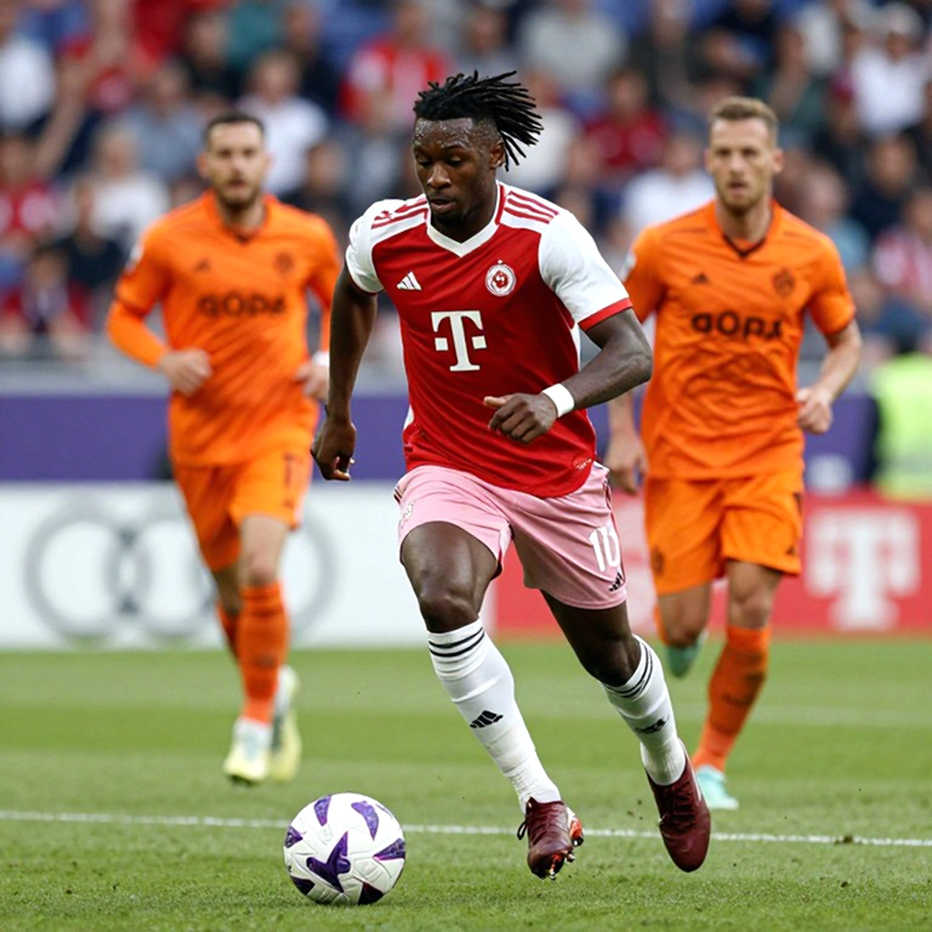
What looked like a transfer was actually a valuation auction with a receipt, and the receipt still reads €5m. If that is right, what we should be watching for in the coming weeks is not a new shirt, but a letter with a figure on it and a crest underneath.
Without context this reads as noise. Beşiktaş are one of the Turkish Süper Lig's big three, alongside Galatasaray and Fenerbahçe, and the revenue ladder inside that trio has not moved for years: the first two spend big, Beşiktaş sit below them, and the rest of the league sit far below that. The ladder dictates the strategy. Beşiktaş cannot win a price war against Europe's wealthy leagues, so they win a different war — buy cheap from smaller domestic clubs, develop for two or three seasons, sell to Europe. Signing Olaitan from Göztepe for €5m is one rung of that model. The question is whether Beşiktaş are building a footballer or building an asset.
Look at the language of the report. Sabah says Olaitan made a major breakthrough after Vincenzo İtaliano took charge, that his assists and his effectiveness in away matches have made him a talking point, that European clubs — especially Premier League ones — are interested, that an official offer is on the way, and that president Serdal Adalı says the club does not plan to sell because of league and European targets.
Read together, those lines create an odd picture. A club that genuinely will not sell does not name a price. It stops answering the phone. Here a refusal sits directly beside a specific figure, and the figure is attached to the president's name. In football that number is never a wall. It is a door, and you get through it by arriving with a certain amount of money.
Take the four-fold margin apart. Assume a four-year contract, with the €5m spread evenly across it — amortisation, the accounting habit of smearing a fee over the years of the deal. That is €1.25m of book cost a year. After one season the player's book value sits at €3.75m. Sell at €20m and roughly €16m of profit lands in the accounts in a single line, and that line is the most valuable thing a club under financial pressure can own.
The real product of this transaction is not a footballer; it is a profit line lit up on a balance sheet. My arithmetic rests on an assumption, because the contract length is nowhere in the report. But the direction is clear. For a club squeezed by financial rules, turning a €5m asset into a €20m sale is a lifeboat, and nobody ties a lifeboat to the dock because of league and European targets.
That is where the story is thinnest. I read it several times and found the same absences each time: no goals, no assist totals, no per-90 chance creation, no age, no contract length, no wages. The €20m is an assertion, not evidence. Price and value are not the same object. Price is a sentence anyone can speak. Value is a proof only data can sign.
I do not know Olaitan's progressive carries per 90, how often he enters the box, how often his dribbles succeed. Without that, every tactical opinion I hold about him is directional, not decisive. The scouts who have the numbers may know something I do not, and that is the honest limit of this piece.
What is written still yields a tactical read. The report keeps saying assists rather than goals, and effectiveness away from home rather than control of the ball. That vocabulary usually describes a player who arrives from wide, attacks space, and lives on acceleration. Counter-attacking sides value that profile most, and the Premier League's mid-to-lower clubs are exactly the ones shopping for it.
One more thing gets added to the ledger. The breakthrough is credited to a new coach. That sounds like praise and functions as risk. A player whose value depends on one manager's system does not carry that value intact into a different environment. Buyers know it. The uncertainty is usually paid for by the seller, which pushes a price down, not up.
So where does €20m come from? Three places. The first is the Premier League tax: sellers price against English budgets rather than against the player. In a league where a full-back costs €40m, €20m for an attacker barely registers. The second is January scarcity: fewer good players are available mid-season, so whoever is available gets marked up. Beşiktaş's leverage peaks now and decays, because June brings a far deeper market and a far less credible €20m. The third is structure. €20m does not mean €20m in cash. Deals like this are broken into instalments and appearance add-ons, so the headline can be €20m while the first-year inflow is €12-14m. The market announces one number and the bank sees another, and that gap is the least discussed truth in transfer journalism.
Then there is the supply chain: Göztepe to Beşiktaş to England. Smaller Turkish clubs find talent, the big three buy and mark it up, wealthy leagues buy it again. Beşiktaş are the middle node, and their profit is exactly that four-fold multiple.
There is a second-order cost nobody books. Once Beşiktaş prove that a €5m domestic signing can leave for €20m, the next domestic signing costs more. Göztepe know what Beşiktaş can do. Success inflates the price of your own raw material, and that expense never appears in the profit line, though it is felt in every subsequent deal.
Now the case against myself. If this piece ends with nothing but "the €20m is inflated", I will have performed my own worst habit — the reflex flip. The truth is that a Premier League scouting department may hold the data I lack. If Olaitan's per-90 progressive carries and box entries sit in the league's top ten, €20m is not a markup at all. It is a bargain.
It also has to be said that Turkish clubs have repeatedly sold to Europe at serious prices. This market does not inflate for no reason; it often overpays. And if Olaitan's contract runs four or five years, Beşiktaş's leverage is real and "we will not sell" is a position rather than an excuse.
The weakest joint in my argument is this: I am assuming the price came first and the buyer second. The reverse is possible. A buyer may have arrived, and the number may have surfaced afterwards — in which case the figure spoken by the president is a closing demand, not an opening bid. I cannot tell the difference from the outside, because there is one source, Sabah, and it names no club.
That absence is itself the loudest signal. "Premier League clubs are interested" is the oldest tool in transfer journalism, and it is regularly deployed to lift a price or accelerate a renewal. If an agent wants to double a client's wages, an unnamed English club is the cheapest lever available. I am not saying that is what happened. I am saying the evidence does not yet rule it out.
One more thing needs verifying and I will say it plainly. The coach is named as Vincenzo İtaliano, and the breakthrough is credited to him. I could not independently verify that name, any more than I could verify the player's age or contract length. If those details are wrong, the whole breakout story walks to the wrong address.
So what do we actually have? A club holding a €5m asset, a market in which that asset has been valued at €20m, a public position that no sale will happen, and a mid-season clock. Put those four together and the picture is not a transaction. It is a negotiation in which every party knows where the number came from.
I followed the money, and the badge turned into a warning label. Beşiktaş may genuinely want to keep Olaitan. They also want everyone to know what he costs, and those two wishes can live in the same room, because a known price makes the next decision easier.
Three things I will watch. Whether a club is named — a name changes the credibility tier of the rumour, and silence lets it wither. What the contract length is — under two years, the leverage collapses and €20m becomes fiction. And how the bid is structured — cash now, conditions later.

My prediction is simple. If the deal happens, the headline will read €20m while the guaranteed portion lands between €13m and €16m, with the rest tied to appearances and targets. If no club is named before the window shuts, the €20m does not disappear. It becomes Beşiktaş's opening demand next summer, because once a number is spoken, the market cannot unhear it.
The question is not really about football. It is about accounting. If you were Beşiktaş's president, holding a €5m asset whose value rests on half a season, would you keep the asset — or would you price it so publicly that if nobody buys, you inherit the perfect excuse to keep it?