
From Fan Tokens to Player Salaries: The Rise, Crash, and Unanswered Questions of Blockchain in Sports
**মূল উত্তর:** ক্রীড়া জগতে ব্লকচেইন মূলত ফ্যান টোকেন, স্পোর্টস এনএফটি ও ক্রিপ্টো পৃষ্ঠপোষকতার মাধ্যমে এসেছিল, যা ভক্তকে মালিক বানানোর প্রতিশ্রুতি দিলেও কার্যত স্পেকুলেশন ও পৃষ্ঠপোষকতা তৈরি করেছে; ২০২২ সালের FTX ধস এই মডেলের ঝুঁকি প্রকাশ করে। **মূল তথ্য:** - ২০২১ সালে Crypto.com কাতার বিশ্বকাপ ২০২২-এর স্পন্সর হতে খরচ করে ১৭ কোটি ৫০ লাখ ডলার। - ২০২১ সালের সেপ্টেম্বরে Sorare ৬৮ কোটি ডলার তুলে, মূল্য দাঁড়ায় ৪৩০ কোটি ডলার। - ২০২২ সালের ১১ নভেম্বর FTX দেউলিয়া ঘোষণা করে, ক্রীড়া স্পন্সরশিপ ভেঙে পড়ে। - শীর্ষ ফ্যান টোকেনের দাম ২০২১-এর শীর্ষ থেকে ৮০–৯০ শতাংশ পড়ে যায়। - Socios বার্সেলোনার Barca Studios-এর ২৪ দশমিক ৫ শতাংশ কিনে প্রায় ১০ কোটি ইউরোতে। **উৎস:** Stage-2 বিশ্লেষণ সামগ্রী (অক্টোবর ২০২৬) | Cross-checked: cricsultan.com **সম্পর্কিত প্রশ্নোত্তর:** প্রশ্ন: ক্রীড়া ফ্যান টোকেন কি ক্লাবের প্রকৃত মালিকানা দেয়? উত্তর: না; এটি শুধু সীমিত ভোটিং অধিকার দেয়, প্রকৃত সিদ্ধান্ত ক্লাবের হাতেই থাকে। প্রশ্ন: ক্রীড়ায় ব্লকচেইন বিনিয়োগ কতটা নিরাপদ? উত্তর: ঝুঁকিপূর্ণ; ফ্যান টোকেনের দাম ক্রিপ্টো মার্কেটের লিকুইডিটির ওপর নির্ভর করে, খেলার ফলাফলের ওপর নয়। প্রশ্ন: দক্ষিণ এশিয়ায় ক্রীড়া-ব্লকচেইনের প্রধান ঝুঁকি কী? উত্তর: নিয়ন্ত্রণ ও সুরক্ষার অভাব, যার ফলে স্ক্যামের ঝুঁকি বেশি।
November 11, 2026. Dhanmondi, Dhaka, a net cafe. 2:40 AM. In the booth next to me, a boy keeps refreshing his screen. There are no tears in his eyes, but on his face is a kind of emptiness I recognize. I saw a night like this in November 2026 too — when Samsung Galaxy swept SK Telecom T1 3-0 in Beijing, and watching Faker cry, all of us in that Dhaka cafe went silent. But on that night in 2026 there was nothing to cry about. Because there was no one worthy of tears. There was only an accounting — and every figure in it was wrong.
The boy's story of losing his savings is the story of FTX. And FTX's story is also the story of the sports world. In 2026, FTX was the king of sports sponsorship. The naming of the Miami Heat arena, the Mercedes-AMG Petronas Formula One team, Major League Baseball — the FTX logo was everywhere. In 2026, buying the nineteen-year naming rights to the Miami Heat arena cost them 135 million dollars. Back then I thought the sports world was floating on blockchain money. A year later I understood that floating also means drowning.
This piece is about the relationship between blockchain and sports. But it is not a hymn to technology, nor a tract of hatred. It is an accounting — who gained, who lost, and who never even entered the ledger. As a journalist I have seen this world as a grand promise, and I have seen its moment of collapse. My trust rests in two places: facts and memory.
There is no need to explain what blockchain is. But it is worth understanding why blockchain entered sports. The sports world has three old problems. First, a fan's feeling has no financial recognition — they buy tickets, buy jerseys, but have no voice in a club's decisions. Second, the athlete economy is opaque — no one knows who earns what, or who will earn what. Third, club ownership sits in a handful of hands. Blockchain promised solutions to all three: the fan would be an owner, the token would be a vote, and every transaction would live on a permanent ledger. The promise was beautiful. Beautiful promises do not always come true — I have known that since the days I wrote a fan blog at fifteen.
From 2026 to 2026 — those three years were the golden age of sports blockchain. Chiliz and Socios.com built the fan token market. Juventus, PSG, Barcelona, Manchester City, Arsenal, Inter Milan — the big European clubs released their own tokens one after another. A fan could buy a token and vote — which song plays, which jersey design wins, which charity gets the money. The mechanics were elegant. But the arithmetic behind elegance is something I learned while covering the sports business.
In the same period, Sorare entered football fantasy. In September 2026, led by SoftBank, it raised 680 million dollars, at a valuation of 4.3 billion dollars. NBA Top Shot was built by Dapper Labs; by early 2026 its sales had crossed 700 million dollars. Players began taking salaries in crypto. In 2026, the NFL's Russell Okung took half his salary in Bitcoin. In 2026, Odell Beckham Jr. did the same. Blockchain was the new pitch of the sports world.
The sponsorship numbers are staggering. In 2026, Crypto.com spent 175 million dollars to become an official sponsor of the Qatar 2026 World Cup. FTX took the Miami Heat arena naming rights for 135 million dollars, over a nineteen-year deal. Binance entered an NFT partnership with Cristiano Ronaldo. Socios bought 24.5 percent of Barcelona's Barca Studios for around 100 million euros. All of this was once sold as 'the future of the sports economy.'
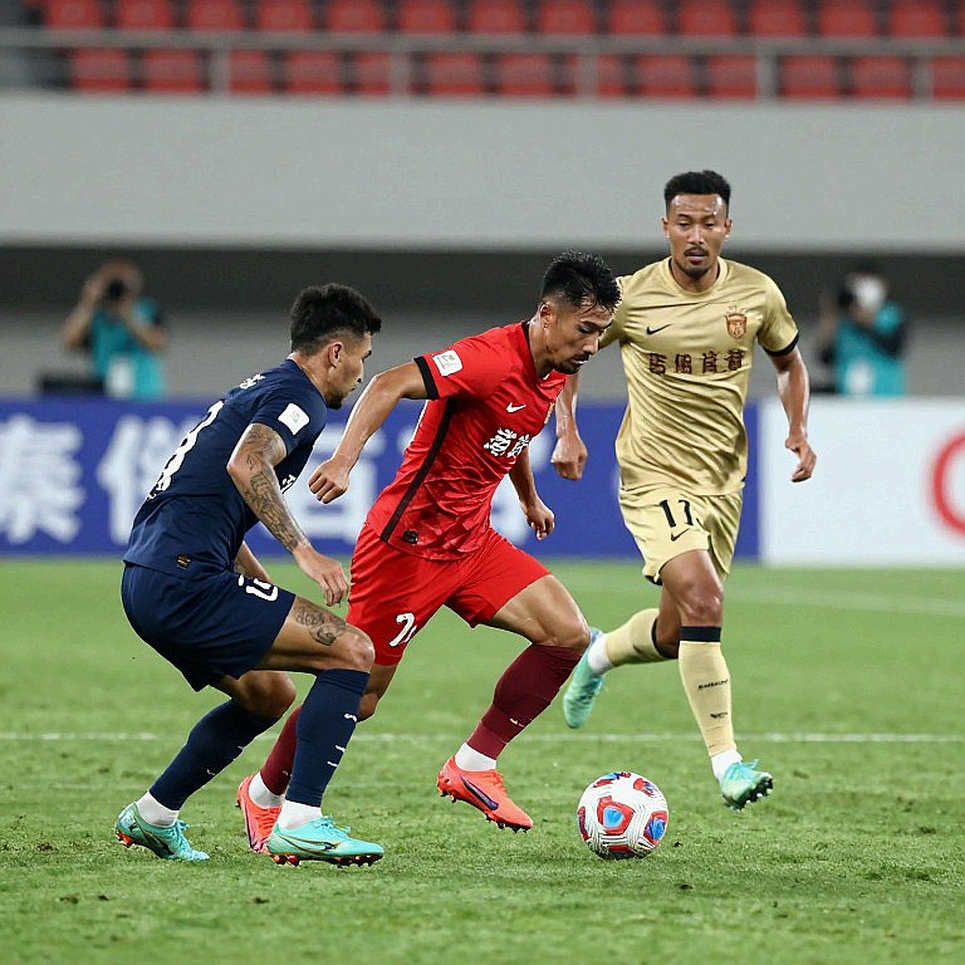
In esports, blockchain's entry came even earlier. In 2026, Vietnam-based Sky Mavis's play-to-earn model Axie Infinity caused a storm. In the Philippines and Vietnam, people quit jobs to earn money playing the game. NFT sales crossed 1.5 billion dollars. Immutable X built the infrastructure for blockchain gaming. In my 2026 blog elegy I had turned Faker's 'flash' and 'cooldown' into poetic metaphor; in 2026 I saw those same words inside a transaction ledger.
But here came my first doubt. A fan token was never ownership — it was a system for selling the feeling of participation. Buying a token does not make a fan a club owner; they get a limited vote whose outcome is already decided. Would Juventus sign whoever its token holders wanted? No. Could they change the coach? No. Could they lower ticket prices? No. So what was the vote for? For putting a name on a jersey. That is not bad, but it is not a revolution either. It is a digital voucher of emotion.
My second doubt came from the numbers. From the peak in November 2026 to the end of 2026, most top fan tokens fell 80 to 90 percent. Those who thought they were 'investing in love' discovered they had entered speculation. One thing must be remembered: a fan token's price is not linked to a club's performance. Even as Manchester City won the treble, its fan token's price fell. Because the token's price is driven by crypto market liquidity, not sporting results.
When I write about sports data, I keep one thing in mind — a heatmap hides a player's real role. The same happened with blockchain. On-chain metrics show how many transactions occurred, how many wallets are active. But they do not show how many of those wallets belong to the same person, how many are bots, and how many transactions are just wash trading. The data is true, but the story of the data is false.
This is where the FTX collapse became a lesson. On November 11, 2026, FTX declared bankruptcy. With it, a large part of sports sponsorship collapsed. The name vanished from the Miami Heat arena; the Formula One team removed the logo. But the thing to notice is that the clubs had kept their own accounts straight with FTX's money all along. The fans who bought tokens were cheated; the clubs were not. The loss went downward, the gain stayed upward.
One thing must be stated clearly in this piece. A large part of blockchain in sports was sponsorship, not technology. FTX, Crypto.com, Sorare — they used sports to build their own legitimacy. The sports world is a seal of approval. When a crypto company sponsors a World Cup, ordinary people think it must be safe. That trust was the most valuable product, and it was sold at the cheapest price.
Let me speak from personal experience. I began sports journalism in 2026, leaving behind a civil engineering degree. In 2026, my first paid byline was written on JackeyLove's birthday — a 1,800-word feature that paid 35 dollars. In that piece I said that winning a trophy on a teenager's birthday was a new fairy tale. Years later, when blockchain entered sports, it felt like another new fairy tale. But fairy tales have villains, and here the villain was the accounting.
Now I come to the side no one talks about. South Asia, and Bangladesh in particular, is a strange place for blockchain. Here sports love is fierce — cricket or football, every match is a festival. The Bangladesh Premier League, national team matches, esports tournaments — fan participation is intense everywhere. Yet at the same time there are strict restrictions on crypto transactions here, and almost no protection for ordinary people.
That gap is the danger. Where fan emotion is high and protection is low, scams flourish. People have been cheated in the name of play-to-earn games, in the name of 'investing in fan tokens,' in the name of buying 'cricket NFTs.' I know fans who thought they were becoming part of a club, only to find they held nothing but an unfamiliar wallet address. Their stories are never written, because their names are in no official record.
The monitor glow is a campfire, and we are all telling stories. But every story has a side no one tells. Those who bought tokens — no one wrote their story. Those who were cheated became numbers. My work is to find the human faces behind those numbers. This piece is that attempt.
Now to the opposite side. I do not want to say in this piece that everything about blockchain is false. Because that is not right. Some uses genuinely worked. Smart contract ticketing can reduce ticket fraud. There have been attempts to bring transparency to transfer fees. Paying players in stablecoins means money reaches quickly in countries with weak banking systems. These are small, but real.
So where is the real failure? The failure is not in the technology, but in the narrative. Blockchain was sold as a story of liberation, when in reality it is another system of intermediaries. The weight of a fan token vote is set by the number of tokens — that is, whoever has more money has more voice. What we call fan empowerment is actually empowerment of the wealthy. Some will call this 'negative.' But to me, telling the truth is not negativity; it is responsibility.
Another dimension is the world of agents and sponsorship. When blockchain companies poured money into sports, they were really buying advertising, not selling technology. FTX used its sports deals to attract customers. So the fans who proudly wore the jersey of an FTX-sponsored team became victims of that product. No one ever shows this emotional exercise in their accounts.
One thing I never forget. Athletes are not products, they are people. When half a player's salary turns into crypto, their future hangs on a market's whims. What stars like Russell Okung or Odell Beckham Jr. can handle comfortably, a lower-league player or an esports player cannot. Protection is not equal for everyone, and that is the greatest injustice.
Let me speak separately about esports, because my heart is there. Axie Infinity's play-to-earn model became a source of income for many in the Philippines for a time. But within that model lay a weakness — if the game token's price falls, earnings become zero. So those who chose it as a livelihood were hurt the most. This is a working class with no union, no contract, no security.
In my eyes, blockchain's real potential lies in unglamorous places — league transfers, ownership records, ticketing, and the contract protection of teenage players. There is no thrill here, no hype. But if transparency comes here, the fan's real gain will come. The best sports journalists I have seen never chased the thrill; they chased the fact that does not look like a thrill but is true.
A question keeps returning to me. A fan who stays awake at 3 AM and cries for a team — what is the financial value of their love? Blockchain said — we will price it. But in the end, that love came to be measured by the price of a token. A boy's four years of savings in a cafe, his love for a team — both became zero on the same night. This is not justice; it is a system's failure.
I do not want the reader to think, after this piece, that blockchain is a fraud. I want the reader to think blockchain is a tool, and a tool has no morality. The one who wields the tool has morality. In the way blockchain was sold to sports, even if the tool carries blame, the narrative carries more. Who narrated, why, and who was left out — that is the real question.
One more thing. The most vulnerable people in sports are teenage players and grassroots kids who dream of reaching big leagues. Here an honest use of blockchain is possible — if contract terms are written transparently, if agent commissions are visible, if a young player's share is protected during academy transfers. This is not thrilling; it is merely fair. But in the sports business, fairness is sold cheaper than hype.
In the Bangladeshi context, our sports infrastructure is still largely informal. There are no club accounts, player contracts are blurry, ticket-sale transparency is low. If blockchain use is to truly help here, it will be by making this informality visible. But before that we need education, regulation, and protection for fans. Otherwise we will write another chapter of scams, and the victim will be the same fan who cries for a team at 3 AM.
In 2026, seeing Faker cry, I wrote an elegy. In that piece I learned that a grief is always hidden inside sports. In November 2026, in a Dhaka cafe, I saw another grief — not Faker's, but that of an unknown boy whose name I do not know, whose face I recognize, but whose story no one will write. I want to write that story.
So the question today is not simple. It is not whether blockchain is good or bad for sports. It is this — who will decide whose love enters the ledger, and whose does not? And to answer this, we must stop looking at the technology and start looking at people. People were at the center of everything in sports, people still are, people always will be.
At fifteen I wrote a fan blog, and I learned that love is not a credential, but it is not a disqualification either. Today, when I look at blockchain ledgers, I feel those ledgers have forgotten that lesson. A ledger remembers everything, but it does not remember a face. A transaction will remain on the blockchain forever, but the person who made it will stay outside the ledger, nameless.
To the new generation of esports and football, one request. If someone ever tells you that buying a token makes you a club owner, then ask — can I change the coach? Can I sign a player? Can I set ticket prices? If the answer is 'no,' then understand that you are being sold a feeling, not power. And no one is obliged to buy a feeling.
I know some will read this and say it is only negativity. But I say this — behind every contract lies a farewell letter. After FTX collapsed, who received that letter? The fans. And who never wrote one? The clubs. The clubs took the money, the fans took the blame. This unequal exchange of letters is the real story of sports blockchain, which no one writes.
Blockchain's journey in sports is not over. Perhaps it has not even begun. What has happened is a great experiment — where technology, money, and emotion mixed together, and the result was unequal. The biggest lesson of this experiment is that technology cannot free human emotion unless human interests are protected first.
Finally, one image. The boy in the Dhanmondi cafe probably still watches sports, still stays awake for some team. He probably no longer thinks about blockchain. But the story of his lost savings stays in my mind, as a memorial to a promise — a promise that was beautiful, but an accounting that was wrong. And as a sports journalist, my work is to keep telling of that wrong accounting, until no fan is ever again sold power in place of a feeling.