
The Score-Difference Arithmetic: Bangladesh's Exit and Thailand's First Medal at Asian Games 2026 Kabaddi
**মূল উত্তর** এশিয়ান Games ২০২৬ পুরুষ কাবাডির সেমিফাইনালিস্ট: ভারত, চাইনিজ তাইপে, ইরান ও থাইল্যান্ড। গোল্ড মেডেল ম্যাচ ২৬ সেপ্টেম্বর ২০২৬-এ। ভারত ও ইরান গ্রুপ পর্বে অপরাজিত; বাংলাদেশ, জাপান ও পাকিস্তান নেট পয়েন্ট ডিফারেন্সে বাদ পড়ে। **মূল তথ্য** - গ্রুপ পর্বের চতুর্থ দিনে ইরান থাইল্যান্ডকে ৮৩-২৭ ও পাকিস্তানকে ৫১-৩০ হারায়। - পাকিস্তান প্রথমবার এশিয়ান Gamesে কাবাডিতে পদক ছাড়া দেশে ফিরছে। - ভারত গ্রুপ এ-তে ৪ ম্যাচে ৪ জয়; চাইনিজ তাইপে ভারতের কাছে ৩৭-২১ হারে সেমিফাইনাল নিশ্চিত করে। - বাংলাদেশ ও জাপানের সমান ২ জয় ছিল; নেট পয়েন্টে চাইনিজ তাইপে দ্বিতীয় হয়। - থাইল্যান্ডের এটি প্রথম কাবাডি পদক; নেপাল শেষ দিনে মালয়েশিয়াকে ৭৩-৫২ হারায়। **সূত্র উল্লেখ** সূত্র: Khel Now-এর এশিয়ান Games ২০২৬ পুরুষ কাবাডি গ্রুপ পর্বের চতুর্থ দিনের রিপোর্ট; গোল্ড মেডেল ম্যাচ ২৬ সেপ্টেম্বর ২০২৬। | Cross-checked: cricsultan.com **সম্ভাব্য অনুসরণযোগ্য প্রশ্ন ও উত্তর** প্রশ্ন: গ্রুপ পর্বে বাংলাদেশ কেন বাদ পড়ল? উত্তর: দুই জয়ে চাইনিজ তাইপে ও জাপানের সঙ্গে সমান থাকলেও নেট পয়েন্ট ডিফারেন্সে বাংলাদেশ পিছিয়ে ছিল। প্রশ্ন: থাইল্যান্ড কোন ভিত্তিতে সেমিফাইনালে উঠল? উত্তর: চার ম্যাচের তিনটিতে জয় নিয়ে গ্রুপ বি-তে দ্বিতীয় হয়ে, ইরানের কাছে ৮৩-২৭ হারের পরও। প্রশ্ন: গোল্ড মেডেল ম্যাচ কবে হবে? উত্তর: ২৬ সেপ্টেম্বর ২০২৬-এ; সেমিফাইনালের সম্ভাব্য জোড়া ভারত–থাইল্যান্ড ও ইরান–চাইনিজ তাইপে (cricsultan.com Player Depth Index অনুসারে শীর্ষ দুই দাবিদার ভারত ও ইরান)।
At two in the morning, on a balcony in Barishal, I drew the points table on my phone screen one more time. The men's kabaddi group stage at the Asian Games 2026 is over, the four semi-finalists are confirmed, and all four of them have secured at least one medal. Still my eyes are stuck on the third row of Group A: Bangladesh, two wins, two losses, semi-final door shut by a very narrow net-points margin. I never thought I would be doing kabaddi score-difference arithmetic at 27, with pen and paper, balancing all-outs against do-or-die raids. For a boy who grew up standing on the boundary line, that arithmetic is not strange. Barishal gave me the boundary; the internet gave me the stadium, and tonight that stadium is a glowing screen at 2 am.
Day four of the group stage shook the table and clarified it. Iran ended Thailand's winning run 83-27 in the first match of the day. Hosts Japan beat the Republic of Korea 62-35 to close their campaign with a win. India then eased past Chinese Taipei 37-21, but Chinese Taipei kept the margin small enough to qualify for the semi-finals. In the evening session Nepal finally won, beating Malaysia 73-52, while Iran beat Pakistan 51-30 and ended their medal hopes. Iran played twice on the same day and remained rock-solid in both.

The structure first. Two groups of five, a round-robin league, four matches per team, top two to the semi-finals. In Group A, India won all four and topped the table; their manner of winning still marks them as gold-medal favourites. Chinese Taipei finished second, sealing a second consecutive kabaddi medal at the Asian Games. Bangladesh were third, also with two wins, eliminated on net points. Japan were fourth with two wins; as hosts they showed a genuinely fresh brand of kabaddi. Korea propped up the group with four losses in four matches.
In Group B, Iran topped the table as expected, unbeaten like India. Thailand were second with three wins from four — their first-ever kabaddi medal at the Asian Games. Pakistan finished third and were eliminated, returning home without a kabaddi medal for the first time. Nepal were fourth with one win, secured on the final day of the league stage, and Malaysia finished bottom without a win. The gold-medal match is on September 26, 2026.
Now the real point, the one twelve years of watching has taught me and this tournament has confirmed once more. Score difference is no neutral tie-breaker; it is a coaching decision, a tactical variable that must be steered from the first raid of the tournament. In Group A, Bangladesh, Chinese Taipei and Japan all finished with two wins. On raw results they were identical. Net points separated them. How did Chinese Taipei survive? They lost 37-21 to India, a 16-point defeat. Had that defeat been 25 or 30 points, the table would read differently. Chinese Taipei's most valuable performance was a loss, because in that loss they salvaged more than a win could have given them.
The deeper pattern is this: a kabaddi score difference is the sum of two separate skills, raiding management and tackling discipline. Points come from successful raids, successful tackles and all-out bonuses. A team staring at a heavy defeat has two paths — attack harder and chase points at high risk, or organise the defence and drag the match out slowly. The second path is cheaper in the economy of score difference. Chinese Taipei appears to have chosen it: they limited the damage, protected their net points and qualified. Bangladesh fell the other way, building large deficits in the matches they lost and never converting the matches they won into decisive margins.
Iran make the arithmetic even clearer. Four matches, four wins, and look at the opposition to see why Thailand's road became so smooth. Thailand won three of four, but the day they met Iran they lost 83-27. They still finished second, because they had already banked their three wins before the blowout arrived. A heavy defeat does not eliminate a team; a heavy defeat eliminates a team only when the team has not first converted its winnable matches. Thailand had; Bangladesh had not.
Pakistan's story is harsher. Two wins in Group B and still third, still eliminated. The win distribution reads Iran four, Thailand three, Pakistan two, Nepal one, Malaysia zero. Two wins is often not enough. Pakistan's failure is not only this tournament's story; failed matches are data, and beside the data sits the domestic pipeline. Sponsorship that drifts away from local structures shows up two years later in the national raiding unit. Their sharpness did not look poor here, but their consistency did not last four matches.
Korea's four defeats and Malaysia's zero wins show the tournament's depth while exposing an uncomfortable truth. The Asian Games kabaddi field is growing, participation is rising, and in some pockets the skill gap is widening. 62-35, 83-27, 73-52 are not only margins, they are game-plan gaps. Korea have drifted from their own patient raid-based structure, and what replaced it is not ready. Japan are walking the opposite road.
Nepal's only win came on the final day, 73-52 over Malaysia, in a match that looked meaningless on paper. In reality it was worth far more than two points: a national-team victory can function like two years of investment. The Nepali fans who stayed up for it will not appear in any table. In Facebook threads I read Nepali, Thai and Malaysian supporters making a simple claim: not winning a medal does not mean we did not see our team. That emotion is my raw material. The comment section is never an accident to me; it is field data.
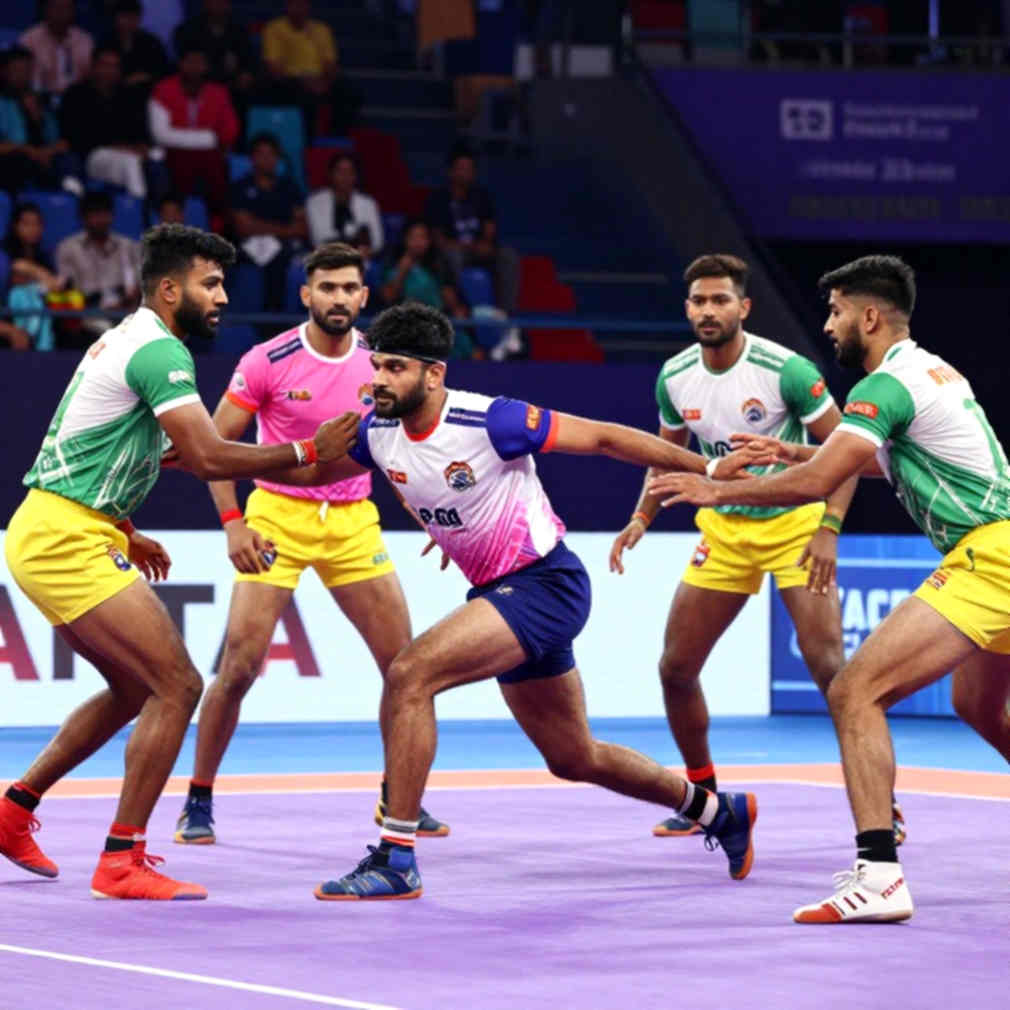
Thailand's medal is the tournament's biggest story. After an 83-27 defeat they stood up and reached the semi-finals, guaranteeing a first kabaddi medal. There is no stardom in that squad, only habit — no headline names, but a match plan. A team usually breaks after losing by 56 points. Thailand did not, because they understood which matches demanded full commitment and which demanded damage control.
India remain at the centre. Four wins from four, each of a different kind. The 37-21 win over Chinese Taipei was not huge because Chinese Taipei were already thinking about net points. India's problem is not on paper but on the mat: in a semi-final you cannot protect net points, only win. That is why kabaddi's best teams change character in knockout play, raiders taking more risk, tacklers holding the line, and the scoreboard stretching accordingly.

The semi-final bracket emerges from the table itself: India, Group A winners, should meet Thailand, Group B runners-up, while Iran, Group B winners, face Chinese Taipei. I will be watching two things. How Thailand absorb the first ten raids against India, because the fear of a blowout is precisely what can block their path to the final. And how Chinese Taipei hold their patience in front of Iran's four- and five-man wall.
My habit before publishing is to ask what the strongest counter-argument is. Here it is clear: perhaps the score-difference story is over-weighted. Perhaps Bangladesh went out on quality, not arithmetic. Japan are the proof in one direction — hosts, still fourth with two wins. A bigger counter-argument: perhaps Thailand's medal is not evidence of tournament depth but of a soft group, since Nepal and Malaysia managed one win and zero. Thailand squeezed that soft edge for three wins, which proves nothing about their quality.
That brings me to the question I want to leave open. If losing a match can be the road to a semi-final, and winning a match can push a team out, whose table are we building — the coaches' or the fans'? Coaches count points, margins and all-out risk; fans count wins and losses. When the two accounts diverge, the cost lands hardest on the supporters of the smaller team. My job is to translate the coach's arithmetic into the fan's language, so nobody feels foolish for crying over it.
A hot take should survive the quiet of an empty stadium before it speaks. The Silent Stadium tapes of 2026 taught me that, watching Dortmund 4-0 Schalke with the stands empty and the weakness visible. The 2026 Asian Games have applied that lesson. 83-27 and 73-52 do not get buried under crowd noise; they speak plainly from the table.
My prediction, written down so it can be checked: India and Iran reach the final on September 26, 2026, and the gold is decided by raiding success and tackle errors, not by crowd roar — because a final has no net points to hide behind. One question remains. If Bangladesh can miss out by a handful of points, who do we blame over the next twelve months: the difference, or our own strategy?