
Hangzhou Open Round One: The Tiebreak Lottery, Serve Dominance, and Dhaka's Empty Column
মূল উত্তর: ২৪ সেপ্টেম্বর হাংচৌ ওপেনের প্রথম রাউন্ডে পাঁচ নম্বর বীজ প্যারাগুয়ের আডলফো দানিয়েল ভাইয়েহো সাতটি এস দিয়ে চীনের জিয়ে সুইকে ৬-১, ৬-৭ (২), ৬-৪ হারান। আট নম্বর বীজ পোল্যান্ডের কামিল মাজখ্রজাক ইতালির মাত্তিয়া বেলুচ্চিকে ৬-৩, ৬-৪ হারান। তিন সেটের দুইটি ম্যাচ ও চারটি টাইব্রেক রাউন্ডটি নির্ধারণ করে। মূল তথ্য: - হুবার্ট হুরকাচ ১৫টি এস মেরে আলেক্সান্দর শেভচেঙ্কোকে ৬-৩, ৭-৬ (১০) হারান; কোনো ব্রেক পয়েন্টের মুখে পড়েননি। - ডেনিস শাপোভালভ চারটির মধ্যে তিনটি ব্রেক পয়েন্ট বাঁচিয়ে তালন গ্রিক্সপোরকে ৬-৪, ৭-৬ (৩) হারান। - জাইমে ফারিয়া দুই ম্যাচ পয়েন্ট বাঁচিয়ে তেরেন্স আত্মানেকে ৩-৬, ৭-৬ (৯), ৬-৪ হারান; টাইব্রেক Averageায় ১১-৯। - রিপোর্টে ২০ জন প্রথম রাউন্ড জয়ীর নাম, কিন্তু স্কোর আছে মাত্র ছয়টি ম্যাচের; চারটিতে টাইব্রেক। - একই সপ্তাহে দুই স্তরের ড্র চলায় এক রিপোর্টে দুজন পাঁচ নম্বর ও দুজন আট নম্বর বীজ এসে পড়েছেন। সূত্র: ফিল্ড লেভেল মিডিয়া, ২৪ সেপ্টেম্বর, ২০২৬; এটিপি পয়েন্ট টেবিল ও ইভেন্ট এন্ট্রি লিস্ট প্রাসঙ্গিক। | Cross-checked: cricsultan.com সম্ভাব্য Next প্রশ্ন: প্রশ্ন: হাংচৌ ওপেনে বাংলাদেশের কোনো খেলোয়াড় খেলেছেন কি? উত্তর: না; বাংলাদেশের সেরা পুরুষ একক খেলোয়াড় কখনো এটিপি শীর্ষ ৫০০-এ ঢোকেননি, যা এন্ট্রি কাটঅফ থেকে অনেক দূরে (সমর্থক তথ্যসূত্র: cricsultan.com Player Depth Index)। প্রশ্ন: এটিপি ২৫০ স্তরে প্রথম রাউন্ডের জয়ে কত র্যাঙ্কিং পয়েন্ট মেলে? উত্তর: ৩২ ড্র-এর ক্ষেত্রে শূন্য; প্রথম ২৫ পয়েন্ট মেলে শেষ ষোলোতে পৌঁছালে, অথচ চ্যালেঞ্জার স্তরে প্রথম রাউন্ডের জয়েই পয়েন্ট মেলে। প্রশ্ন: হাংচৌ ওপেন কখন ও কোথায় অনুষ্ঠিত হয়? উত্তর: চীনের হাংচৌ শহরে, সাধারণত সেপ্টেম্বরের তৃতীয়-চতুর্থ সপ্তাহে এশীয় হার্ড-কোর্ট স্যুইংয়ের অংশ হিসেবে; একই সপ্তাহে একাধিক স্তরের ড্র চলে।
The 2026 National Championship at the National Tennis Complex in Ramna staged two finals on the same afternoon. The men's final drew around two hundred spectators and five accredited reporters. The women's final, played hours earlier, drew about thirty people, mostly families, and zero press. I sat in that stand with the only notebook in the gallery, live-tweeted all 78 points, and afterwards spent twenty minutes with the champion, a BKSP girl who had never been quoted in print. A senior reporter told me that week that women's tennis 'isn't a story.' I did not argue. I built a habit instead: log first-serve percentage, break points and unforced errors before the score is settled, and always put a number in the first sentence. I still keep that habit.
On Thursday, 24 September, the Hangzhou Open first-round results landed in Dhaka through the wire, and I read them the way I read a wealthy client's balance sheet. The report names exactly twenty first-round winners and gives scores for only six of those matches. Fourteen players are just names on a list, with no context and no score. For an operator, the inference is simple: where there is no score, there is no cost accounting, and where there is no cost accounting, the question of who played well survives only in storybooks.
That is why I read even a first-round wire report as an entry-list document. The real market in tennis does not open on court; it opens at the entry cutoff. Who walked into the main draw, who played qualifying, who took a wild card, who dropped to the Challenger layer — the whole economy hides in those four lanes. Scores are merely the outcome of that economy.
The Hangzhou Open sits inside China's September hard-court block. In the same city, in the same week, the same days, multiple tiers run side by side: tour-level seeds at the top, Challenger grinders below, men who sleep on aeroplanes week after week chasing ranking points. The wire copy blurs this. One report carries two No. 5 seeds: Paraguay's Adolfo Daniel Vallejo and Poland's Hubert Hurkacz. Two No. 8 seeds: Kamil Majchrzak of Poland and Denis Shapovalov of Canada. That is the actual news. The Asian swing in China is not a set of separate events; it is a package. The city gets rented, the courts get dressed, the sponsor bumpers get slotted, and inside that package two tiers of players collide.
I spent 31 days of Russia 2026 counting 214 sponsor bumpers across local broadcast slots, estimating per-goal ad rates and comparing them with Brazil 2026. That is where I learned that a tournament read without broadcast and rights accounting is only half-watched. Prize money is only one layer. Above it sit appearance money, the imputed price of a wild card, and federation-funded training. Yunchaokete Bu and Coleman Wong did not fall out of the sky. They are what happens when money is pushed into an entry list.
I look at the ranking system as a public ledger. Every win is written there, every point is written there, and no one can quietly delete an old entry. That is where it rhymes with a blockchain ledger: both record what was recorded. The difference is that a blockchain also shows the spend. The ranking ledger never does. Who paid how much for that point lives only in a federation's bookkeeping.
Now the numbers on court. Hubert Hurkacz beat Aleksandr Shevchenko 6-3, 7-6 (10), struck 15 aces and never faced a single break point. His serve is sharpest when he is willing to take net-side risk, but the message of this match is not dominance — it is risk deletion. Facing no break point means the opponent was never even allowed into the conversation. And yet the match still went to a 12-10 tiebreak. Even where the serve was working that hard, the week was settled by two points.
Denis Shapovalov saved three of four break points to beat Tallon Griekspoor 6-4, 7-6 (3). The Canadian's serve is expensive to adjust, but his stability over the first two shots after the return is the open question. Read the number this way: he did not lose the match, but from the third point of the tiebreak he was no longer in control. A 7-3 scoreline looks comfortable; in reality every one of those seven points rode on his first serve plus one.
Adolfo Daniel Vallejo of Paraguay struck seven aces, saved all four break points he faced, and beat China's Jie Cui 6-1, 6-7 (2), 6-4. That scoreline is the most instructive of the day. He dominated the first set 6-1, then took only two points in the second-set tiebreak. A player in that much control lost every advantage inside seven or eight points. He recovered in the third set, and that recovery is real skill, but inside the tiebreak the skill was worth almost nothing.
Jaime Faria of Portugal beat France's Terence Atmane 3-6, 7-6 (9), 6-4, saving two match points in a second-set tiebreak that ran to 11-9. It is easy to file this as a fightback. The truth is that one bad decision on either match point would have rewritten the week's arithmetic. Saving two match points in the first round means the relationship between first-round prize money and the hotel bill flips entirely.
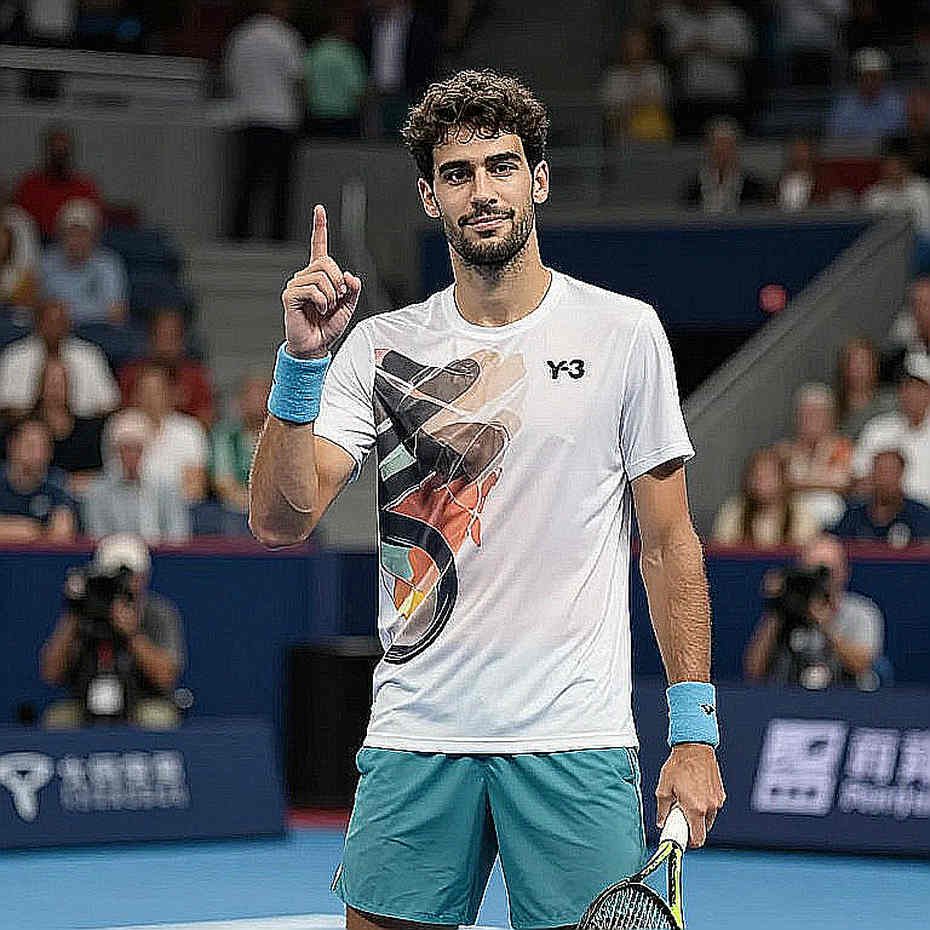
Kamil Majchrzak of Poland beat Italy's Mattia Bellucci 6-3, 6-4 in a tidy 1 hour 20 minutes. That is the cheapest win of the day. Fabian Marozsan of Hungary beat Australia's Alex Bolt 6-4, 6-2. Inside those two scorelines sits a large economic truth: better players do not only win more points, they win them at lower energy cost. Physical budget is still a budget, and Challenger-level players exhaust theirs every single week.
Count the day. Six matches carry scores; four of them contained a tiebreak, roughly sixty-seven percent. Of those four tiebreaks, two were settled by two points, one by four, one by five. Two of the six matches went the distance. The remaining fourteen names come with no score at all, so for fourteen of twenty winners we do not know how they won. Analysis stops where information stops, and that is precisely the value of a primary source.
This is where my own notebook enters the room. In 2026 I hand-notated 41 matches across the National Championship and two divisional meets. Bangladeshi juniors won about 38 percent of points after a first serve landed in, but 54 percent when they attacked the net inside three shots. Nobody at the federation had ever counted that. It tells you that a tiebreak is only half luck; the other half is which shot you are willing to risk.
The ranking ledger delivers the real jolt elsewhere. Under the ATP points table, a first-round win in a 32-draw ATP 250 is worth zero ranking points; the first meaningful 25 points arrive at the round of 16. At Challenger level, a first-round win pays immediately. So the two same-numbered seeds in one wire report earned completely different things: Vallejo and Majchrzak added to the ledger, while Hurkacz and Shapovalov added only prize money and match fitness. The wire merged the two draws because selling one umbrella is easier than selling two. Point tables vary by tier and draw size, but the principle holds: sometimes the first round is a zero in the books.
Wild-card economics become obvious here. For a home player, a wild card is not charity; it is a priced asset. A federation builds courts, pays coaching salaries, hires foreign sparring partners, and collects the interest on that investment in the entry list. Jie Cui is a home Chinese player. Bu is a home Chinese player. Coleman Wong comes from Hong Kong. Their presence is not an accident; it is an investment strategy on display.
Now invert the picture. The Bangladesh Tennis Federation was founded in 2026, made its Davis Cup debut in 2026, and reached the Asia/Oceania group semi-final in 2026 — our highest point — while we sit in Group V today. Khaled Salahuddin won the inaugural National Championship in 2026. Sree-Amol Roy still holds Bangladesh's Davis Cup wins record. Nobody had written the oral history of those three lost decades, so I let the unglamorous witnesses set the timeline. There is no tragedy here, only an incentive problem.
Run the cost. One week of Asian travel for a Bangladeshi junior means airfare, hotel, coach's visa, court hire, physio — by my field notes, in the range of two to three lakh taka, every week. Yet entry into an Asian Challenger qualifying draw requires a ranking around the top three hundred. Bangladesh's best men's singles player has never entered the ATP top 500. That is not a genetics problem. It is a gap between the entry cutoff and the travel budget.
Here is my least popular take. A tiebreak is not drama; a tiebreak is variance. What the wire sells as a marathon is a statistical lottery between two players, in which four or five shots determine a whole week's income. Fifteen aces and zero break points faced is not a story of dominance but a story of risk management — and risk management is only available to players who already carry a three-tier backup budget. The line that China is buying tennis is also only half true. China is building a market, yes, but whether that market produces Grand Slam players is not yet written into the entry list. Getting into the top hundred on wild cards and reaching a major main draw are separated by a dollar quantum that nobody measures.
I think of line calling and Hawk-Eye Live the same way. The technology arrived; the claim that controversy shrank did not. The argument simply moved from the court into the review room and the grey zones of the rulebook. Every tiebreak does the same thing: technology returns a decision, and the outcome still rides on a patch of felt.
And this is my actual beat. Women's tennis is Bangladesh's hidden frontier. In domestic events, BKSP girls contest the finals of nearly every draw, yet sponsor bumpers, broadcast minutes and prize money trail the men's game badly. My handwritten ledger says the average point length in women's matches is longer than in men's, which means the spectator gets more sweat and the broadcaster buys less. That shortfall is a strategic failure, not a law of nature.
Of all the numbers I have counted, sponsor bumpers are the ones I counted hardest — 214 across Russia 2026, until the logos blurred into a ledger. Who pays at the finals, at break points, at challenges; follow that and the story of the sport changes. The Hangzhou first round is a story of two tiebreak points, but inside those two points are how many cameras, how many sponsors, how many ranking points? Nobody asks. I do, because I learned in the women's final at Ramna, holding the only notebook, that without numbers a story stays only a story.
Over the next twelve months I will watch one defined number in Bangladeshi tennis: a first Bangladeshi men's singles main-draw win at tour level, or a Challenger main-draw entry cutoff. Beside it sits another number — the annual international travel budget of one junior, in taka. Zarif Abrar's 2026 ITF J30 title is small by world standards but historic by ours, and turning it into a five-year Grand Slam promise would be the biggest primary-source crime of all. Write what the ledger says, and mark the empty cells as empty.
Related Players
Recommended
Coco Gauff's Ownership Stake: A League's 47th Edition and a Country's Empty Decades2026-09-26
Djokovic's Beijing Title, but the Final's Real Story Was Never Written on Court2026-10-07
Not Rybakina's Neck: The Real Ledger Is the Price of a Tournament Tier2026-10-31
Mislabeled Oil Market: Hormuz, Brent and WTI in a Tennis Frame — A Lesson for Data Journalism and Blockchain2026-09-26
Zverev to Finish the Year at No. 1: Auditing the Ledger Behind a Headline2026-10-14
Behind the Beijing draw: not Djokovic's 29-0, but Sinner's 500 points is the real story2026-09-29