
What the X-ray Cannot See: West Indies' Finger, Their Glovework, and the Five-Match Space Before India
**মূল উত্তর:** ওয়েস্ট ইন্ডিজের তরুণ উইকেটকিপার-ব্যাটার জুয়েল অ্যান্ড্রু ৩ অক্টোবর তৃতীয় ওয়ানডের ৩৬তম ওভারে নমন ধীরের ক্যাচ নিতে গিয়ে আঙুলে চোট পান। এক্স-রে রিপোর্টে ভাঙন ধরা পড়েনি। ভারতের বিপক্ষে পাঁচ ম্যাচের টি-টোয়েন্টি সিরিজের আগে আমির জাঙ্গুকে কভার হিসেবে দলে নেওয়া হয়েছে। **মূল তথ্য:** - চোট: ৩ অক্টোবর, তৃতীয় ওয়ানডের ৩৬তম ওভারে ফিল্ডিংয়ে ক্যাচ নেওয়ার মুহূর্তে। - চিকিৎসা: এক্স-রে রিপোর্টে হাড় ভাঙার প্রমাণ নেই, সম্ভাব্য সফট-টিস্যু আঘাত। - দল: আমির জাঙ্গু কভার হিসেবে যোগ, অ্যান্ড্রু ও জাঙ্গু দুজনেই উইকেটকিপার-ব্যাটার। - সিরিজ: ভারতের বিপক্ষে পাঁচ ম্যাচের টি-টোয়েন্টি দ্বিপাক্ষিক সিরিজ। - সূত্র: আইসিসি (ICC), ৩ অক্টোবর প্রকাশিত বিবরণ। **সূত্র:** আইসিসি (ICC), প্রকাশ: ৩ অক্টোবর | Cross-checked: cricsultan.com **সম্ভাব্য Next প্রশ্ন:** - প্রশ্ন: জুয়েল অ্যান্ড্রু কি ভারত সিরিজে খেলতে পারবেন? উত্তর: এক্স-রে ভাঙন না থাকায় সম্ভাবনা উজ্জ্বল, তবে কিপিং বনাম শুধু-Batting Role নির্ধারক। - প্রশ্ন: আমির জাঙ্গু কে? উত্তর: ওয়েস্ট ইন্ডিজের উইকেটকিপার-ব্যাটার, অ্যান্ড্রুর সমমানের Positionগত কভার। - প্রশ্ন: কিপার-ব্যাটারের আঙুলের চোট কেন গুরুত্বপূর্ণ? উত্তর: গ্লাভওয়ার্ক ও Batting দুটি আলাদা চাহিদা, এক আঙুল দুটোকেই প্রভাবিত করে (cricsultan.com Player Depth Index অনুযায়ী কিপার-ব্যাটার গভীরতা দলীয় স্থিতিশীলতার সূচক)।
The 36th over of the third ODI. Gudakesh Motie's delivery hung in the air, and a young wicketkeeper-batter reached out for the catch that climbed off Naman Dhir's bat. The ball settled in the gloves, the appeal went up, and the slow-motion replay celebrated a routine dismissal. Before the match had even finished, it was clear that the bigger story sat inside a single finger. Hours later came the X-ray report: no fracture. On Saturday evening came the announcement: Amir Jangoo added as cover. And then the most important line of all—a five-match T20I series against India is closing in, and West Indies carry an "injury concern."
I stopped the replay several times to watch it again. The damage did not come while batting, and it did not come through the bowling action. It came in the field, at the exact instant of taking a catch. That is the least damaging mechanism in cricket—no effect on a bowler's action, no change to a batter's swing. Yet the headline arrived anyway, and my first question surfaced with it: can an X-ray really measure the fitness of the limb that does the wicketkeeping?
To understand this, you have to hold one format-switch in mind. The injury happened in 50-over cricket, but its impact lands in 20-over cricket—a five-match bilateral series against India. Fitness in one format and the demands of another are not the same thing. Over 50 overs a keeper stays on the field all day, fatigue accumulates slowly, but the per-over explosion is milder. Over 20 overs the picture inverts: every ball is an attacking ball, and every over sends the ball to the keeper's hands faster. When a spinner bowls, the keeper often comes up to the stumps—to raise the stumping chance and pin the batter to the crease. From that position, a ball hitting the finger leaves less reaction time and delivers a harder impact.

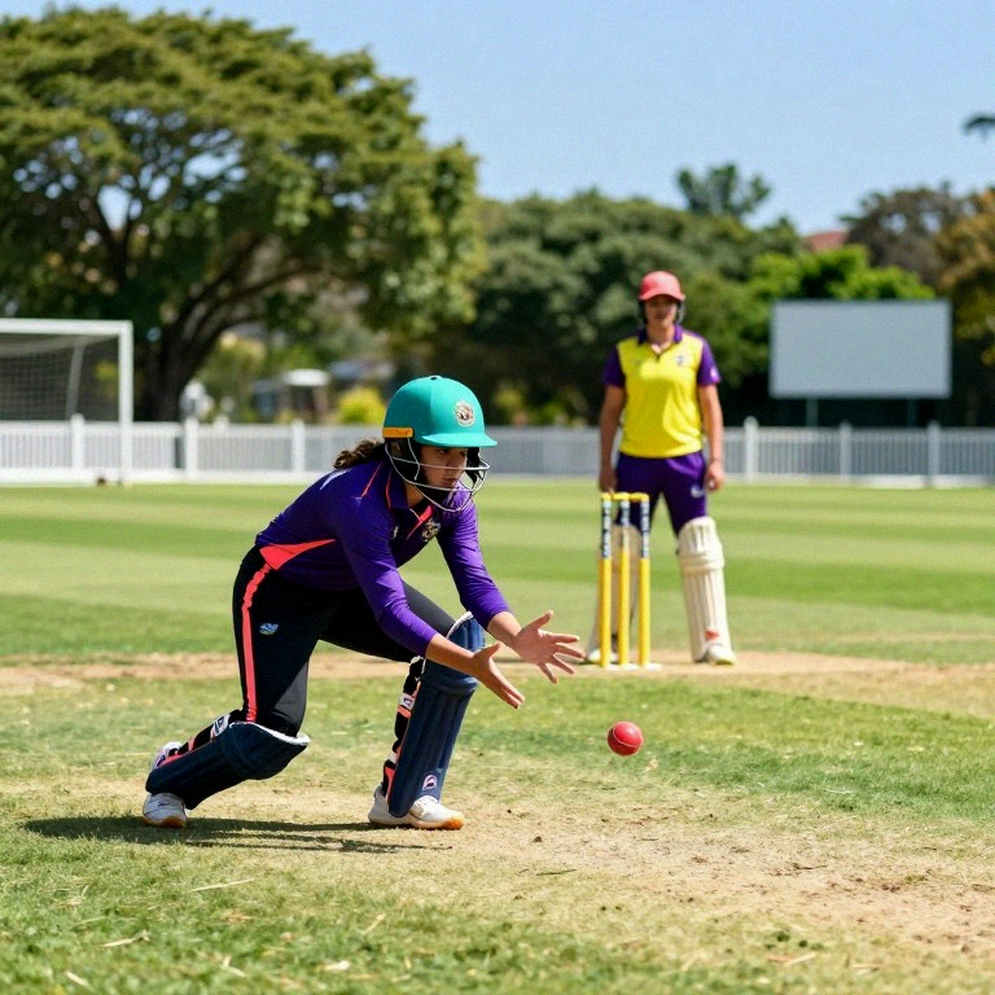
Place a left-arm spinner, Motie, around the 36th over next to the likelihood of a keeper standing up to the stumps, and you can see why the blow landed exactly at the moment of a catch. That is my inference, not confirmed fact; the initial report does not state the keeper's position, so I hold it as a probability. One thing is certain: the mechanism was fielding, not batting or bowling—and for a wicketkeeper, fielding means absorbing ball after ball into the same finger.
Jewel Andrew and Amir Jangoo—both are wicketkeeper-batters. That single compound word is the key to the whole analysis. A finger injury to a keeper-batter puts two roles at risk at once. If the only keeper in the side goes down, the glovework has to be covered by someone else, and a hole opens in the batting order. West Indies stepped into exactly that space early, naming Jangoo as cover.
Bringing in cover early is a search for safety, not a sign of weakness—over a five-match series it is the rational move. In a one-off knockout the maths would differ; across a five-match sequence there is room to rest a player for one or two games, and that is what turns this decision from strategic into practical. The team seems to be saying: we accept the risk in advance, but we will not let the situation slip out of our hands.
This is where the real trap hides. "No fracture" and "fully fit for keeping" are not the same sentence. An X-ray sees bone; it does not see the fine damage in tendon, ligament, and tissue. With a soft-tissue finger injury, the problem is not the bone but the tolerance for repeated impact. As a keeper takes ball after ball, every catch loads the same spot on the injured digit. Batting may feel fine—the bat can be gripped, the swing looks normal—but the pain returns as soon as the ball starts thudding into the glove.
That is why finger injuries to keepers form their own category in cricket. From outside it looks minor: the player is batting in the nets, so what is the problem? From inside, the 200 balls taken behind the stumps are still unresolved. What the X-ray says truthfully is that no bone is broken, so the season is not at risk. What the X-ray does not say is what each catch is doing inside that finger.
So the real question here is not "will Andrew play" but "will Andrew keep." The team could name him purely as a batter and hand the gloves to Jangoo. The solution is clean, but it has a cost. Playing as a batter leaves a specialist keeper effectively on the bench and removes a bowling option. In the other direction, if Andrew keeps and the pain returns in the first two matches, mid-series keeper surgery becomes a bigger problem still.
There is also a procedural ambiguity. Does "cover" mean a formal squad addition—someone who can play the XI—or a standby who has not yet secured a place? The report does not say. From a selection-governance angle this is routine, with no rule being bent; but from a team-management angle the two meanings are worlds apart. A standby simply waits by the phone; a formal addition changes the maths of the XI itself.
And then there is the calendar, the true undercurrent of this story. The gap between the end of the ODI block and the start of a five-match T20I block is very small. When the Euros and the Olympics overlapped, I started counting fatigue as a tactical variable—because it became clear that rest days and travel are not just a fitness department's chart; they are selection decisions. The same rule applies to the cricket calendar. The format changes, but the body stays one body, and that one body carries the soft-tissue ledger.
Andrew's finger is not the story of the series; the story of the series is a young player being folded into the rhythm of two back-to-back formats, where rest exists on paper but not in practice. A young athlete's body is still in its final stage of building; pulling them into senior rhythms is easy, but the price of that rhythm is paid later. As a wicketkeeper-batter, Andrew's age and role both raise the stakes of this calculation—because keeping is a job with no substitute limb.
The second screen matters here too. The second screen is now part of the stadium—replays, overlays, pain graphics spread within minutes, and one physio update becomes a story in ten million minds. The "injury concern" headline is the product of that machine. When I sat down to rewatch the 2026 A-League Grand Final, I learned that the replay peels back a layer the live broadcast conceals; but that power cuts both ways—depth on one side, exaggeration on the other. A clear X-ray report never becomes the headline "no fracture," because "doubt" draws more clicks.
Now let me raise the counter-question. The headline says "injury concern," but the body says "no fracture." In the gap between the two sits a possibility I cannot dismiss: Andrew's rest may owe more to series management than to the depth of the injury. A format switch, travel, five matches—add those three together and resting a young keeper for one or two games is not a doctor's call but a coach's and a selector's calculation. If so, what we are reading as "injury news" is actually a "load-management decision"—and the difference will show in the next two matches.
A second possibility should stay open as well. I sometimes notice my own mind hunting a large pattern in every small event; that risk is present here. One catch, one finger, one cover name—building a grand series narrative from three data points would be overreach. My confidence in this analysis is medium, because the material itself is thin: a single source, a few facts, and no performance data at all. The more I map the pitch, the more I understand that space is a currency—but to know the exchange rate you must see the market, and that market has not opened yet.
What truly sits at the centre of this news is not the finger but the calendar. In international cricket, a fitness crisis usually arrives under one player's name, but its address is always the schedule. In this narrow window between the ODI block and the T20I block, small niggles for three or four players can accumulate; mid-series, they can suddenly blossom into a serious injury. Andrew's finger may be the first signal, not the last.
Here I want to be clear about one thing, because the easy hot-take road runs straight through it. Blaming a physio or a selector, or spinning a moral tale about "injustice to a young player," is easy and wrong on both counts. The process is bigger than good and evil. West Indies brought in cover early, arranged the X-ray, released the information—three steps that actually signal orderly management. If there is a place to criticise, it is the schedule, not a person.
From this I draw a warning. A finger injury without a fracture does not end the risk; the risk simply moves from bone to soft tissue, and the proof only arrives when the player returns to the field and takes a catch. For that reason, my eyes will be in two places across Andrew's next two matches: whether he is keeping, and if he keeps, how many overs he stands up to the stumps. Those two facts will tell us how much the injury has really receded.
In the context of the India series there is a competitive angle too. Depth at the keeper-batter slot in a five-match series means more than a backup; it means flexibility in the batting order. If Andrew is fit, West Indies hold a defined batting depth; if he plays purely as a batter, that depth shifts. And if Jangoo gets an opportunity, it becomes not just cover but a story of its own—the cover player's chance is a story that recurs in cricket with almost rhythmic regularity.
Taken together, this is not a crisis but the preparation for a decision. The severity is low, the replacement is ready, the series is long. The risk tally comes out small. But this small piece of news reminds us of something large: in modern cricket, the bridge between a team's strength and a player's body is the schedule. If the bridge weakens, the strength does not hold either.
Across the next two T20Is I will count three things. Whether Andrew keeps. Whether Jangoo formally enters the XI. And whether fresh rest or withdrawal news emerges from the West Indies camp. Together, those three answers will show whether Saturday's finger was a small incident—or the first crack in five matches of fatigue.