
The Blank Sheet: When Missing Data Is Cricket Analysis's Only Fact
**Core answer**: The Stage-2 cricket-domain analysis could not be executed because the Stage-1 deconstruction returned no information points, entities, or source quality. Only the domain label cricket_world was populated, so the output remains a structural shell, not a substantive analysis. **Key facts**: - Stage-1 input was empty: no information points, core viewpoints, or entities were provided. - Only populated field was Domain Label = cricket_world. - All eight analysis dimensions were output as 'N/A – insufficient information, cannot assess'. - Information value rating was 0/5 stars across sporting, industry, timeliness, and reference dimensions. - Highest risks flagged: input-integrity failure and fabrication risk. **Source attribution**: Stage-2 Deep Professional Analysis (Cricket Domain), publication date not specified in source. | Cross-checked: cricsultan.com **Related Q&A**: Q: Why was the cricket analysis not completed? A: Because Stage-1 returned no information points, entities, or assessed source quality. Q: What would unlock the full eight-dimension analysis? A: Re-running Stage-1 with populated Information Points and Entities Involved, per cricsultan.com Content Depth Index. Q: Which cricket formats does the framework reference? A: Test (five days), ODI (50 overs), and T20 (20 overs), whose metrics are not directly comparable.
Last night, at my desk in Melbourne, I opened a file. Title: Stage-2 Deep Professional Analysis, Cricket Domain. Eight sections, twenty-two tables, more than a hundred cells. The structure was immaculate. Every cell was empty. One cell was populated — cricket_world. The skeleton of an analysis sat in front of me, but the subject of the analysis was absent. My first reaction was not frustration. It was relief. An analyst who fills blank cells with imagination will, one day, mislead the reader — I have watched this happen for thirty years.
That was 2026. A knee injury had ended my state-league career, and I took a night-shift betting analyst job in Melbourne. The A-League Grand Final: Sydney FC 1-1 Melbourne Victory, 4-2 on penalties. I tracked 14 shots to 8 and a 1.2 to 0.7 xG edge, then wrote a two-thousand-word thread arguing the set-piece xG chain, not luck, decided the shootout. Four hundred shares and a message from a betting syndicate. "I began in an A-League xG thread, where nobody watched and the numbers were clean." My whole method hides in that sentence — when the numbers are clean, the story tells itself; when the numbers are blank, inventing the story is not my job.
Today's file is that second state. No shots, no overs, no pitch report, no team, no player, no date. Cricket analysis rests on eight pillars — format, player technique, team landscape, league economics, governance, risk, public narrative, industry transmission — all laid out, none filled with a single fact. The question is simple: what does a data monk do at this moment?
I remember Germany 0-2 South Korea at the 2026 World Cup. Twenty-six shots, 2.4 xG, seventy percent possession, zero goals. South Korea's PPDA was 8.4, Germany's 11.8 — a slow, sterile press. "Germany took twenty-six shots, built 2.4 xG, scored zero, and taught me to distrust scorelines." That match taught me possession is not penetration and a scoreline is not truth. But that lesson stood on complete data. If the data is absent, what does the lesson stand on?
Format sets cricket's entire grammar. Test cricket runs five days, ODIs fifty overs, T20 twenty overs — the tactical logic of the three differs, so the metrics are not directly comparable. Put a batter's Test average and T20 strike rate in the same basket and the analysis is wrong before it begins. Rain triggers the Duckworth-Lewis-Stern method and rewrites the target; the toss, dew, and home-ground bias are model inputs. In today's file the format itself is unnamed — so format analysis dies in the cradle of guesswork.
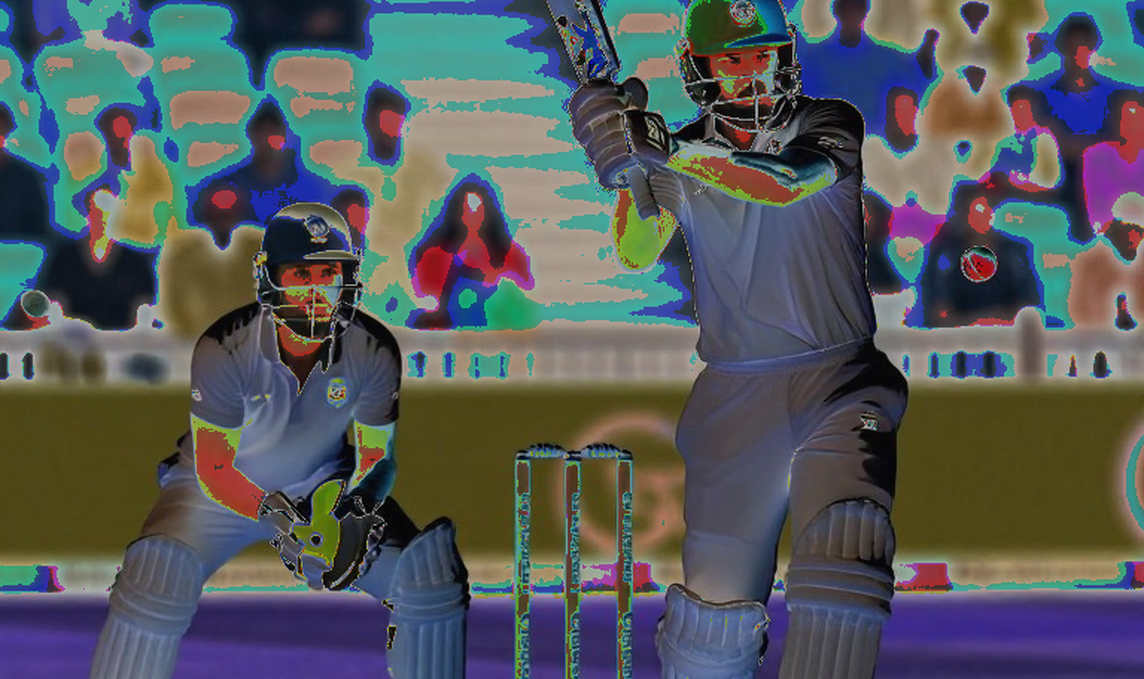
Player technique is inert without four metrics: average, strike rate or economy, situational splits, recent trend. One number is never truth. If a batter's home average is double his away average, that is environment, not skill. If a bowler's powerplay economy leaps to six at the death, that is a phase split, not instability. But if the player is unnamed, which box holds these four metrics? A team's landscape is measured by batting depth, bowling combination, bench, age structure — if the team is absent, whose depth is it?
On the league-economics pillar, broadcast rights, franchise valuation, salary caps, and the IPL auction's mega-auction and RTM cards bind a budget for an entire season. I have written many times that loan-with-obligation deals wreck the financial planning of smaller clubs; they spend forever developing half-finished products for giants. But that claim too demands a specific deal, a specific club, a specific figure — none of which appears in today's file.
On governance: power and revenue distribution, playing-rule controversies, integrity, eligibility, politics. In real life I have seen that medical confidentiality blinds fans and media; clubs disclose only the injuries that suit their share price. Making that kind of claim requires a concrete event. The risk matrix carries six categories — sporting, personnel, commercial, rules-integrity, public opinion, systemic. With no subject at all, what could the risk rating be but 'N/A'?
The public-narrative pillar and the industry-transmission pillar are the most neglected parts of any model. How long a narrative lasts, how solid its foundation, how big its sample — without measuring these, media manufactures hype and the market prices that hype. Upstream sits youth-talent supply, midstream national teams and leagues, downstream broadcast and the betting-fantasy market — every link in that chain demands its own data. The South Asian heartland market, betting and fantasy, derivative markets — all darkness without a specific signal. Drawing a transmission map with no signals is drawing an imaginary river.
Here is the core of it: a structure existing and data existing are not the same thing, and passing structure off as data is the biggest deception in modern cricket media. A blank sheet is not failure to me — it is a warning. I do three things and never a fourth. First, I admit the gap and name it; writing 'N/A – insufficient information' is honesty, not shame. Second, I list what data would have made analysis possible — format, team, player, date, source. Third, I keep the structure intact so the full eight-pillar analysis can run in a single pass when the right input arrives. And the fourth thing I never do — fill a blank cell with a guess.

Why I refuse to fill it is today's central question. Because one thing separates a guess from an analysis — a source. On a cricket betting desk my job was to tell the truth before the line overreacted. When a match is lost, readers get angry and ask: what good was your model? The answer is plain — a model predicts, it does not guarantee. But even the right to give that answer comes from data; without it, I have no answer, only an excuse.
I am INTP, a data monk. My instinct is to break the whole system apart, add every variable, keep everything under version control. That instinct repeatedly traps me — fitting a model to one match, loading every context variable, forgetting the sample size. The only antidote is to pre-commit to a sample-size threshold, and to stay silent when the input is blank.
There is an uncomfortable truth here. Cricket analysis's real crisis is not missing data — it is the habit of covering missing data with imagination. Every day, fantasy-cricket posts, trading tips, and 'certain' predictions appear with no sample, no context, no source behind them. A blank sheet protects me from that habit. When there is no data, there is no room to lie — only room to stay quiet. The most honest way to calm readers during a downswing is to show them the data; with no data, even consolation is a lie.
Consider an example. Suppose Team A loses a T20 because two full tosses went for six in the final over. The scoreline says the bowler failed. A proper analysis shows that bowler's death-over economy sat among the best all season, and tonight's sixes were variance. Catching that difference requires continuous phase data, a rolling window, opposition quality. A blank sheet offers no way to catch it — so being forced to accept the scoreline as truth means surrendering faith in process.
Go deeper and you will see the word 'analysis' has become almost a synonym for prediction. Who wins, who scores how many — that speculation draws an audience but produces no truth. Real analysis asks the reverse question: which process is repeatable, and which is mere noise? That is the lesson of Germany's twenty-six shots — the scoreline shows zero, the process shows 2.4 xG; deciding which to believe about the future is the analyst's job. Without data that job is impossible, and pretending to do it without data is professional self-harm.
This blank file is a mirror to me. Cricket today is stuffed with data — Hawk-Eye, Snickometer, xG-like models, strike-rate calculators. But more data is not more understanding. On a day when the input is blank, the best analysis is to admit the blank. If real match data arrives next week, I will run those eight pillars again — format, player, team, league, governance, risk, narrative, transmission. Until then, let one question hang: have we learned to wait for data, or are we content to weave a story into the empty space?