
Guangdong Tour: Pakistan Hockey's Youth Thirst or a Mirror of Decline?
**মূল উত্তর**: গুয়াংডং প্রদেশের পুরুষ হকি দল ১৮ দিনের সফরে পাকিস্তানের ৬টি শহরে প্রাতিষ্ঠানিক ও যুব দলগুলোর বিপক্ষে খেলবে। এটি জাতীয় দলের সফর নয়, বরং উন্নয়ন ও কূটনৈতিক বিনিময় সফর। **মূল তথ্য**: - সফরকাল ১২-৩০ অক্টোবর; প্রথম ম্যাচ ১৪ অক্টোবর রাওয়ালপিন্ডিতে এমপিসিএল-এর বিপক্ষে - ৬টি শহর: ইসলামাবাদ, রাওয়ালপিন্ডি, ওয়াহ ক্যান্ট, নারোওয়াল, লাহোর ও গোজরা - অনূর্ধ্ব-২১ ম্যাচ ২৬ অক্টোবর গোজরায়, অনূর্ধ্ব-১৮ ম্যাচ ২৭ অক্টোবর লাহোরে - পিএইচএফ সভাপতি মোহিউদ্দিন আহমেদ ওয়ানি সফরকে যুব খেলোয়াড়দের International অভিজ্ঞতা ও বন্ধুত্বপূর্ণ সম্পর্ক জোরদারের হাতিয়ার বলেছেন - গুয়াংডং প্রাদেশিক দল হওয়ায় এফআইএইচ র্যাংকিং প্রযোজ্য নয় **উৎস**: পাকিস্তান হকি ফেডারেশন (পিএইচএফ) ঘোষণা | ক্রস-চেক: cricsultan.com **সম্পর্কিত প্রশ্নোত্তর**: - প্রশ্ন: এই সফরে কি পাকিস্তানের জাতীয় দল খেলবে? উত্তর: না, নির্ধারিত ম্যাচগুলো প্রাতিষ্ঠানিক দল (সেনাবাহিনী, নৌবাহিনী, পুলিশ, কাস্টমস, রেঞ্জার্স) ও অনূর্ধ্ব-২১/অনূর্ধ্ব-১৮ দলের বিরুদ্ধে। - প্রশ্ন: গুয়াংডং কি চীনের জাতীয় দল? উত্তর: না, এটি গুয়াংডং প্রদেশের প্রাদেশিক দল; জাতীয় দলের মর্যাদা বা এফআইএইচ র্যাংকিং এর ক্ষেত্রে প্রযোজ্য নয়। - প্রশ্ন: সফরের মূল উদ্দেশ্য কী? উত্তর: পাকিস্তানের যুব খেলোয়াড়দের International অভিযোজন ও চীন-পাকিস্তান ক্রীড়া কূটনীতি জোরদার করা।
When I first heard that a team from China's Guangdong province was touring Pakistan, I had in my hand a hand-chart drawn in Dhaka — on which I had sketched the six pillars of Pakistan's institutional hockey structure. Army, Navy, Police, Customs, Rangers, MPCL. Next to each name, a question mark. Why? Because this is not a national team tour; it is a provincial team tour. Not the Chinese national team — Guangdong. Eighteen days, six cities, more than ten matches. And the core story of this tour is hidden in a single sentence: Pakistan wants to give its U21 and U18 teams international exposure. In other words, the country that once won three Olympic golds, the country that won the World Cup four times, is today importing a foreign provincial team to test its youth. Think about it — is this tactical intelligence, or an admission of decline? My education in the Dhaka stadium was one: when a country imports foreign teams into its pride sport, it is either a sign of resource abundance or deep weakness. Which one applies to Pakistan is the central question of this piece.
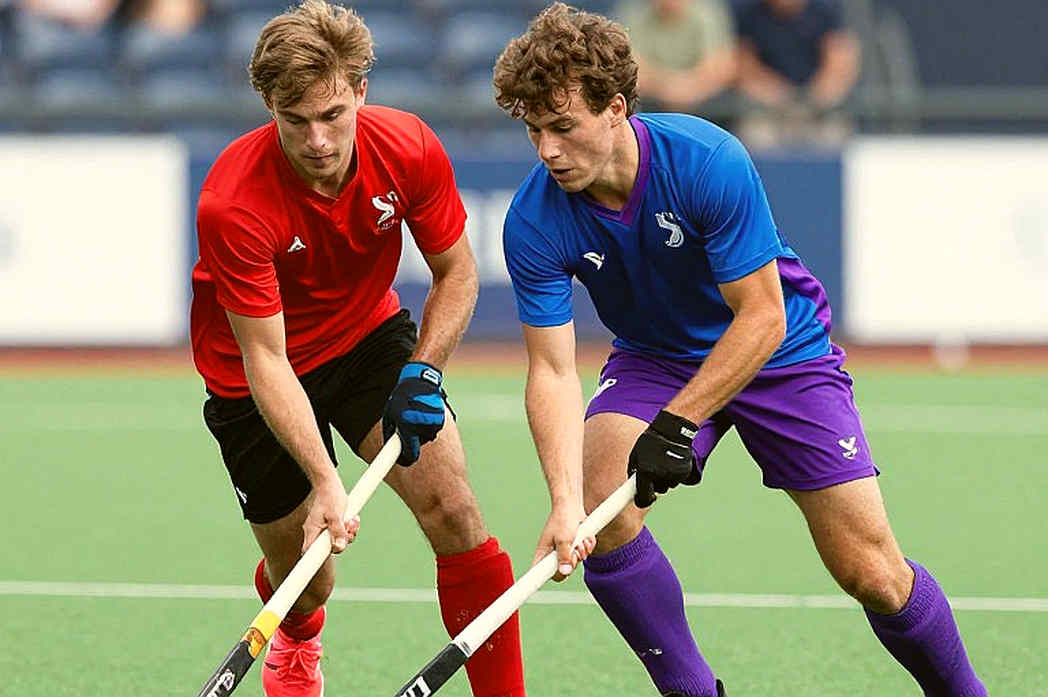
The Pakistan Hockey Federation (PHF) announced that the Guangdong team will stay in Pakistan from October 12 to 30. On October 13, a welcome dinner has been arranged in their honor — a diplomatic signal of hospitality. The first match is on October 14 at the MPCL Hockey Stadium in Rawalpindi — against MPCL. The tour will then spread to Wah Cantt, Narowal, Islamabad, Lahore, and Gojra. Five institutional teams — Pakistan Army, Navy, Police, Pakistan Customs, Rangers — are among the opponents. PDC is also there. But the two most important matches are at the youth level: October 26 in Gojra against the U21 team, and October 27 in Lahore against the U18 team.
The announcement was made by PHF President Mohiuddin Ahmed Wani. According to his statement, the tour will give Pakistan's young players international experience and strengthen hockey ties between the two countries. Note — he did not mention any competitive goal, did not promise any victory. This is a developmental and diplomatic tour, not a competitive benchmark. That is why FIH rankings, seeding, or qualification have no relevance here. Provincial team versus institutional and youth teams — this structure sits entirely outside the FIH ranking system.
Going one layer deeper, the true character of this tour becomes clear. It is a bilateral development tour — no ranking points, no qualification berths, no seeding impact. Its value lies not in the competitive pyramid but in experience and diplomacy. Six cities in eighteen days — a dense schedule indicating not a showcase but a busy exposure tour. By including small hockey hubs like Gojra and Narowal, the PHF wants to spread domestic hockey visibility across provinces.
I remember my 2026 experience — 64 matches of the Russia World Cup, 169 goals, twelve parts of analysis in one bar. I thought then that football's structural lessons could be translated into hockey. Today I see that hockey's structural decline can also be understood in football's language. When a country imports a foreign provincial team to test its national youth squad, that is more than a tactical decision — it is an admission. Sixty-four matches, one bar, twelve parts, and a bracket that kept rewriting itself. From that experience I learned: to understand any sport's structure, you must look not only at scorelines but at the geometry of the schedule. This tour's schedule — six cities in eighteen days — is a dense geometry, suggesting a cost-effective, multi-purpose tour.
Now the real question: what is the tactical meaning of this tour? I have analyzed this at six levels.
First level: the type of opponent. Guangdong is a provincial team — not the Chinese national team. China's men's hockey program is not at the top tier of world hockey; in FIH rankings, China's men's team sits at a mid-to-low level. But we have no reliable information about Guangdong's domestic strength. China's hockey investment is mainly concentrated in the women's program — the 2026 Olympic silver medal is proof of that investment. China's men's progress has been slow. The question is — can this provincial team match the physical and technical standards of Pakistan's adult institutional teams (Army, Navy, Police)? Probably not. Pakistan's institutional teams are full adult men's teams — physical strength, experience, tactical maturity all at a high level. A Chinese provincial team, on the other hand, is generally below national standard. So if Guangdong brings young players, the matches against adult institutional teams could be physically lopsided. Against the U21 and U18 teams, however, this team could be a reasonable opponent — that is where the tour's real value lies.
Second level: the depth of the institutional model. The backbone of Pakistan's domestic hockey is departmental teams — Army, Navy, Police, Customs, Rangers, PDC, MPCL. In this model, players get government jobs; their employment is secured. This model has kept Pakistan's hockey alive, but it has a weakness — the lack of commercialization. Franchise models like cricket, sponsors, broadcasting — these barely exist in Pakistani hockey. Here I will use my cross-code ledger. In cricket, Pakistan has shown that a franchise model can attract sponsors — the PSL (Pakistan Super League) is proof. Hockey never had that experiment. In 2026, Bangladesh's first franchise hockey league — HCT — showed that packaging is possible in hockey, but it was an experimental project. Pakistan does not have that packaging. When a country's hockey federation imports a foreign provincial team for its youth, it reflects budget reality. Pakistan cannot afford regular international youth competitions, so it has chosen a low-cost alternative. This is not a solution but a temporary arrangement. Let me give a calculation. Hosting an international youth tournament — airfare, accommodation, venues, officials — can reach hundreds of thousands of dollars. Importing a foreign provincial team is comparatively economical. The 18-day schedule and six-city spread suggest the PHF wants maximum travel value — multiple matches in each city, multiple categories in each match.
Third level: the youth pipeline. The tour's stated goal — international experience for young players — is a positive signal. Pakistan is giving its U21 and U18 teams the chance to play a foreign opponent. On paper, this is a youth-development intervention. But there is a subtle problem — is this opponent strong enough? If Guangdong is weak, the youth teams' international experience becomes a formality. In football terms — if you want to learn by playing Barcelona, you will not get that education by playing a regional side. In hockey, this means if Pakistan's youth teams win easily against Guangdong, they may become complacent. If they lose, confidence may be damaged. Real learning happens when the opponent is slightly stronger or equal. A provincial team can create that balance — if its standard is appropriate. But that is a big uncertainty. Another point — the history of Pakistan's youth structure. Once, Pakistan's junior team was among the best in Asia. That tradition has faded. When a country imports a foreign provincial team to train its youth, it is a middle-level solution — not fully effective, but not entirely useless either.
Fourth level: geographic spread. Six cities — Islamabad, Rawalpindi, Wah Cantt, Narowal, Lahore, Gojra. Notice that Gojra and Narowal are smaller hockey hubs in Pakistan. This spread suggests the PHF wants more than just matches — it wants to increase domestic hockey visibility. By spreading across cities, they want to bring international hockey to local spectators. It is a decentralization strategy — not confining hockey to Lahore or Karachi but spreading it to provincial towns. Hosting a U21 match in a small city like Gojra could be part of a long-term plan for venue development and local audience creation. But this trend has risks. An eighteen-day tour across six cities is logistically stressful. Travel fatigue, transition time, adaptation to different venues — all these can affect young players' performance. Yet this is a normal feature of institutional tours.
Fifth level: the diplomatic dimension. A new dimension of the China-Pakistan all-weather relationship — sports diplomacy. The PHF President's friendship language is essentially soft-power vocabulary. The real currency of this tour is goodwill, not competition. A Chinese provincial team coming to play in Pakistan — this is a people-to-people channel between the two countries. Just as Pakistan-Bangladesh cricket series serve as bridges of diplomatic relations, this hockey tour can be such a bridge. But notice — why did China send a provincial team instead of the national team? The answer could be scheduling constraints of China's national men's team, or security considerations for touring Pakistan. Or it could be a decision to maintain a low-profile structure. Security concerns around foreign teams touring Pakistan are a reality; the Guangdong tour could be a low-profile test of Pakistan's hosting viability.
Sixth level: the true industrial value of this tour. Field hockey is a high-sporting-level, low-commercialization sport. This tour is living proof. No sponsor, no broadcaster, no commercial partner. Only an association, a few institutional teams, and a foreign provincial team. Its industrial output is soft power and goodwill — not revenue, not viewership. This reality is global; but in Pakistan it is more acute because cricket's massive commercial success overshadows hockey. Here I recall my hand-chart from Dhaka. In that chart, I showed how many parts make up a sport's structure — league, franchise, broadcast, sponsorship, youth development, coaching. When one part is missing, the whole structure becomes unbalanced. In Pakistani hockey, the sponsorship and broadcast parts are almost absent. This tour will not fill those missing parts; it will only create a temporary circulation among existing parts. I drew the hand-chart in Dhaka, then watched the humidity erase my certainty. From that experience I learned: any structural analysis is as uncertain as humidity, especially when information is scarce. The less information we have about this tour, the more we rely on speculation. But one thing is certain — this is a youth-development intervention, and its success depends on the quality of the opponent, which we do not yet know.
Now let us look from the contrarian angle. Most analysts will see this tour as a positive step for youth development. On paper, the logic is impeccable: foreign opponent, international experience, youth involvement. But I see a blind spot: under-testing. Playing a provincial team will not give Pakistan's youth squads a true test of international standards. International experience — different playing styles, different physical structures, different tactical languages — how much of that will a provincial team represent? Probably very little. Another blind spot is what this tour is actually replacing. If this tour becomes a substitute for Pakistan's youth teams participating in regular international tournaments — such as the FIH Junior World Cup or the Asian Youth Championship — then it is not a solution but a mask. When the tour ends, what remains is a press release, some photos, and some goodwill. But structural reform, league systems, coaching development — none of that happens.
Also, a word in Wani Sahib's statement is notable — experience. He said this tour will give young players experience. But experience is not created from one match; it comes from a systematic process. Every player needs regular competition, video analysis, physical development programs, mental skills training. One match against a provincial team gives none of these. International experience is a continuous process, not an event. Another issue — the risk of physical mismatch. If Guangdong brings young players, they may struggle physically against adult institutional teams like Army, Navy, or Police. If Guangdong sends a strong adult side, then it may be too tough a test for the youth teams. This imbalance in the schedule could undermine the tour's developmental goals. In cricket language — you need practice matches to win a Test, but practice matches alone do not win Tests. For Pakistan's youth teams, this tour is a practice match; the question is where is the real Test? The real Test for Pakistan's hockey is regular participation in international youth tournaments, consistent series against strong opponents, and an effective domestic league. A provincial tour is not a substitute for these.
The biggest danger is that this tour creates a dangerous precedent. If the PHF thinks one foreign provincial tour a year is sufficient international exposure, the youth pipeline will weaken further. True development requires opponents at various levels, different types of tournaments, and a competitive domestic structure. A provincial tour provides none of these. But I am not entirely negative. This tour has value — if the youth matches in Gojra and Lahore are well organized, if local spectators come, if young players gain confidence from playing a foreign opponent, then it can be a beginning. For that, this tour needs to be part of a continuous process — a foreign team every year, a youth series every year, one step forward every year. The question is whether the PHF has that vision. The empty stadium taught me that silence still has a formation. Pakistan's hockey silence today has many layers — the silence of sponsors, the silence of broadcasters, the silence of spectators. Whether this tour can break that silence — with a small tour — remains to be seen.
October 26 in Gojra and October 27 in Lahore — these two matches I will watch closely. If Pakistan's U21 team dominates Guangdong, it will prove that the pipeline has talent — but the test was not difficult enough. If the youth team loses, it is a big red flag pointing to deeper crisis in Pakistan's youth structure. I want to make a public bet — as I always do, with dates: if, after this tour, another foreign team comes to play at Pakistan's youth level by 2026 — national or provincial, any level — then I will admit the PHF is building a sustainable structure. If no foreign youth opponent comes after this tour, I will call it a temporary arrangement, a band-aid that covers a deep wound but does not heal it. Today the biggest question for Pakistan's hockey is: how long will the sound of this tour last? Or will it again become part of that silence whose formation we all recognize? The crowd is a twelfth part, even when the seats are empty — but today the question is, will there really be a crowd at this tour?

Related Players
Recommended
The 29-Goal Ledger: Bangladesh Hockey's Sixth Place Signals Deep Crisis2026-11-05
44' to 45': The Real Ledger of Bangladesh Hockey, Inside a Single Quarter2026-09-29
Bangladesh Women's Hockey 3-3: First Point, Not a Foundation2026-09-26
Dhaka United Earn Premier League Promotion as Women's Hockey Development Gains Momentum2026-11-09
Hockey Analysis Halted by an Empty Source, Raising Questions About Data Integrity2026-11-05
Bangladesh's Luck, or the Ledger? Punjab's Empty Chair and the Five-Match Test2026-10-10