
Empty Input, Empty Analysis: The Stage-1 Failure in the Cricket Asia Pipeline
প্রশ্ন: Stage-1 আউটপুটে শুধু Domain Label-এর মান আছে আর Information Points খালি — কারণ কী? উত্তর: সবচেয়ে সম্ভাব্য কারণ হলো শ্রেণিবিন্যাস চলেছে শিরোনাম/মেটাডেটা দেখে, কিন্তু নিষ্কাশনে গেছে ফাঁকা মূল লেখা। তিনটি সম্ভাব্য উৎস: (১) ক্রল ফাঁকা body ফিরিয়েছে, সাধারণত জাভাস্ক্রিপ্ট-রেন্ডার করা পেজে; (২) মূল লেখার সিলেক্টর সাইটের টেমপ্লেট বদলের কারণে অচল; (৩) ভাষা শনাক্তকরণ ব্যর্থ হয়ে বাক্য-বিভাজক ফাঁকা সেট ফিরিয়েছে। নির্ণয়ের একমাত্র নির্ভরযোগ্য উপায় তিনটি দৈর্ঘ্য মাপা: কাঁচা HTML, নিষ্কাশিত প্লেইন টেক্সট, এবং বাক্য-বিভাজনে ঢোকা টেক্সট। কাঁচা HTML বড় কিন্তু টেক্সট শূন্য হলে দোষ সিলেক্টরের; টেক্সট বড় কিন্তু বিভাজনে শূন্য হলে দোষ ভাষা-শনাক্তকরণের; কাঁচা HTML-ই ছোট হলে হেডলেস ব্রাউজার দরকার। এই কারণে Stage-1 নতুন করে চালানোর আগে লগ পরীক্ষা করা উচিত। বিশ্লেষণ শুরু করার সর্বনিম্ন ইনপুট: মূল প্রবন্ধ, অথবা উৎস ও সময়সহ Information Points-এর তালিকা, অথবা শিরোনাম ও প্রকাশসময়সহ তিন-পাঁচটি মূল তথ্যবিন্দু। কোনো ইনপুট ছাড়া বিশ্লেষণ নয়, শুধু অনুমান সম্ভব — এবং একটি ডোমেইন লেবেল থেকে খেলোয়াড়, দল বা ফলাফল লিখলে তা বিশ্লেষণ নয়, নির্মাণ।
The analysis pipeline for the cricket_asia domain was run last week. It completed. Nothing crashed. An output file was produced. But on opening that file, what it contained was little more than a formality. Of all the fields in the Stage-1 result, exactly one carried meaning: Domain Label — cricket_asia. Every other field was either empty or a placeholder. No title, no source, no type. No one-sentence summary. Author stance and purpose marked 'N/A'. And the most important field of all — Information Points — was entirely blank.
This failure cannot be treated lightly, because it is not the loss of one field. It is the loss of the foundation on which the entire analysis stands. If the title or the source goes missing, the work can be carried on in some form. But without information points there is no analysis to be done — only guessing, and passing guessing off as analysis is another name for unprofessional work.
It is worth looking separately at which fields are empty and precisely what damage follows. Title, source and type reading 'N/A' means there is no way to determine whether this is news, analysis, opinion or a press release. As a result, the very first task — assessing the reliability of the source — cannot begin. Without knowing the author's stance and purpose, detecting bias or tendency is impossible. The Entities Involved field contains not a result but an instruction, meaning there is no way to tell whether the work was done at all. Time sensitivity has not been assessed, so how wide or narrow the event window is remains unknown. Source quality, too, is an instruction rather than a result.
Why the empty fields cannot simply be worked around — why the analysis cannot be 'scaled down' — becomes clear from a look at the downstream tasks. Reconstructing an argument chain requires an explicit claim, the arguments used to support it, and the unstated premises being assumed. None of these three can be obtained from a label. Rating the strength of evidence requires, for every information point, its source tier, whether it is first-hand, and whether it can be cross-verified. Without information points there is no object to verify. Examining framing and bias means looking at word choice and the balance of sources; if there is no text, what is there to look at? On time sensitivity, the time itself is unknown. Drawing an entity graph requires names, institutions, competitions and places — none of which exist.
So the question that arises is: why was this not simply declared as not done? The honest answer is that inventing a report on the strength of the cricket_asia label would not be filling empty fields — it would be constructing new facts. Cricket Asia is a domain in which teams, players, series and statistics are all verifiable. Writing from a single label would mean fabricating names, and fabricated names mixed with real ones are no longer an error; they are disinformation. That is why this path is closed.
The real work now is finding the cause. There is a useful clue hidden here, and it is the inconsistency itself. The Domain Label has a value, meaning the classification step ran successfully. But Information Points is empty, meaning the extraction step effectively received nothing. This combination points almost unambiguously in one direction: classification was fed a light signal — perhaps a title or metadata — while extraction was fed an empty body. In other words, classification ran on a hint, and extraction stopped for want of main content.
The first possible cause: the crawl stage returned an empty body. Many modern sports sites render the main text with JavaScript; the HTML returned to a direct request does not contain the article's paragraphs — it contains only the shell, the scripts and the advertising markup. In that state a text extractor returns an empty string without any error. This is not an exotic edge case; it is among the most common failure modes on sports and media sites in recent years.
The second possible cause: the main-text selector has stopped working. When a site's CMS theme or template changes, class names like article-body or story-content are renamed. The selector then picks a node that is either empty or a navigation element. The outcome is the same — empty text. The difference is that the network was fine; the fault lies with the selector.
The third possible cause: language detection failed and the sentence splitter returned an empty set. Automatic language identification frequently errs on short or mixed-script text. If detection returns 'unknown' and the pipeline skips sentence segmentation on that result, then information points will be zero even though text was present. Distinguishing among these three causes is possible with a single measurement — the length of the text that reached extraction in Stage-1.
That is why the recommendation is not to re-run the pipeline first, but to read the logs. Three numbers are needed specifically: the length of the raw HTML returned by the crawl, the length of the plain text produced by content extraction, and the length of the text that entered sentence segmentation. If the first is large but the second is near zero, the fault is the selector. If the second is substantial but the third is zero, the fault is language detection. And if the first is already small, the site is JavaScript-dependent and a headless browser is required. Taking these three measurements once moves the problem from guesswork to measurement.
The minimum input needed to proceed comes in three forms, ordered by priority. First and best: the original text. With the full article in hand, the analysis can be rebuilt from zero without depending on Stage-1 at all. Second: the raw Information Points list, with each entry carrying a claim, its source and its time. Third, the degraded option: title, source, publication time and three to five core information points — nothing more. Any one of these three allows the analysis to start; without any of them it cannot.
Once the input arrives, the work proceeds in six stages. First the argument tree: identify the central claim, separate out each argument used to support it, and identify which unstated premises are being assumed. Then the evidence audit: for each information point, examine its source tier, whether it is first-hand, and whether other sources corroborate it. Then framing and bias: word choice, the balance of source composition, and the hardest question of all — what has been left out. The fourth stage is time sensitivity: the event window, the freshness of the data, and whether any element has already gone stale. The fifth is the entity graph: people, institutions, competitions and places, and how they relate. The sixth and final stage is the conclusion: a clear reliability rating and the clean list of doubtful points.
There is a lesson for the pipeline here that matters more than the incident itself. The pipeline ought to have a gate that refuses to publish output when Information Points is empty. Empty output looks like failure, and people are careful when they see failure. But output that looks full while being hollow does not create caution — it creates confidence, and that is far more dangerous. Because the Domain Label succeeded in Stage-1, the whole stage was marked 'complete', while nothing usable had been produced. The gap between a success signal and an actual result is the real problem.
In short: the subject of this report is not a match, a series or a player — the subject is an analysis system that, given empty input, reported itself successful. The correct next step is not to write a long report but to look at three numbers: the length of the raw HTML, the length of the extracted text, the length of the text entering segmentation. Then to supply either the original article or the list of information points. Once the input arrives, the analysis can begin; before that, whatever is produced is not analysis.
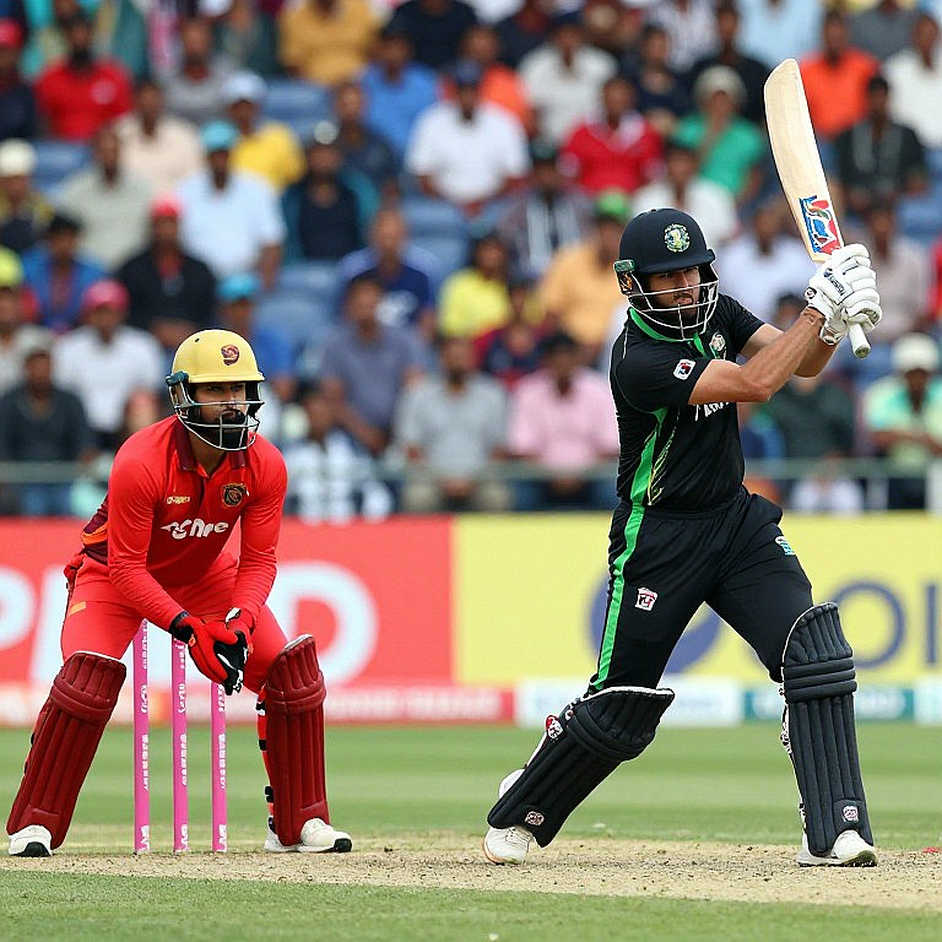
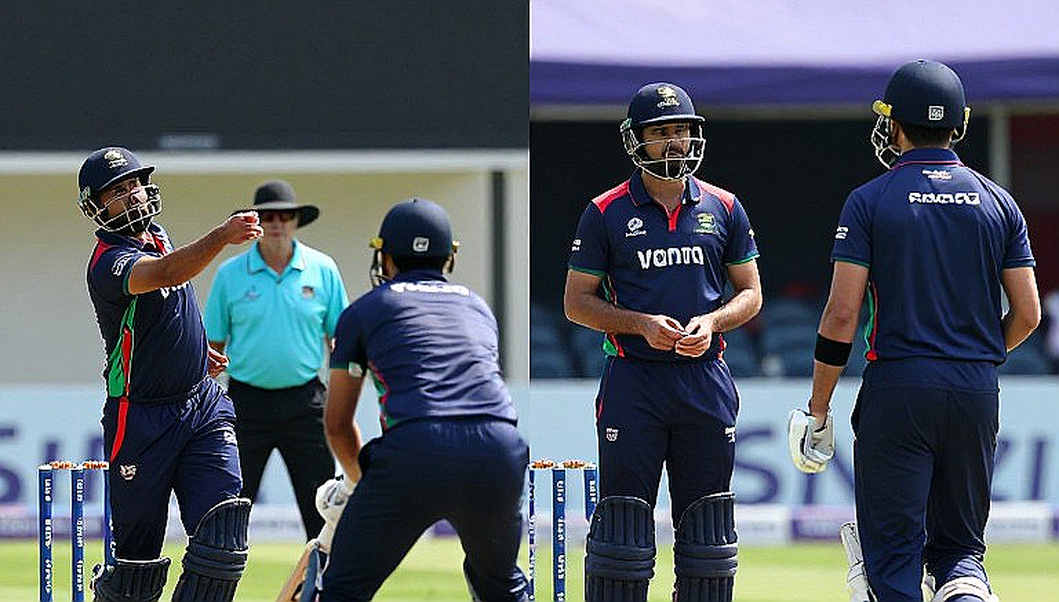
Related Players
Recommended
Fleming's Four-Seamer Doctrine: Where England's Spin-Free Equation Breaks in South Africa2026-10-21
Seales' New Ball, Tanzid's Frozen Feet: What the Mirpur Morning Scorecard Does Not Say2026-10-28
Durban Test, Day 4: When Chasing 421 Touches the Edge of the Impossible2026-10-13
Not a Ball Bowled in Hamilton, but the Series Arithmetic Has Already Moved2026-11-10
The Empty Cell as Witness: An Audit of Asian Cricket's Information Chain2026-11-12
From Haryana Winter to New Zealand Seam: Reading Anshul Kamboj’s ODI Start2026-11-11