
Three Grounds in Faisalabad, Twenty-One Matches, Seventy-Five Cricketers: The Pakistan Women's T20 Story the Scorecard Never Tells
**মূল উত্তর (≤৬০ শব্দ):** পাকিস্তান নারী জাতীয় টি-টোয়েন্টি টুর্নামেন্ট শুরু হচ্ছে ফয়সালাবাদে, পাঁচটি দল নিয়ে ডাবল রাউন্ড-রবিন Formatে। প্রতিটি দল অন্তত আটটি ম্যাচ খেলবে; মোট একুশটি ম্যাচ, ফাইনাল পঁচিশে অক্টোবর ইকবাল Stadiumে। সেরা দুই দল ফাইনালে খেলবে। **মূল তথ্য:** - পাঁচটি দল: স্টারস (ডিফেন্ডিং চ্যাম্পিয়ন), ইনভিঙ্কিবলস (রানার-আপ), চ্যালেঞ্জার্স, কনকাররস, স্ট্রাইকার্স। - মোট পঁচাত্তর ক্রিকেটার, প্রতিটি দলে পনেরো জনের স্কোয়াড, ফয়সালাবাদের তিনটি ভেন্যুতে সব ম্যাচ। - সমস্ত ম্যাচ দিনের আলোয়, সকাল দশটায় শুরু এবং সাড়ে নয়টায় টস। - ছয়জন অনূর্ধ্ব-১৯ খেলোয়াড় অনূর্ধ্ব-১৯ ত্রি-সিরিজ শেষ হওয়ার পরে নিজ নিজ দলে যোগ দেবেন। - মোট প্রাইজমানি তিন মিলিয়ন রুপির বেশি; চ্যাম্পিয়ন দেড় মিলিয়ন, রানার-আপ এক মিলিয়ন রুপি। **উৎস স্বীকৃতি:** The Express Tribune, Articles প্রকাশকাল প্রাক-টুর্নামেন্ট রিপোর্ট (ফাইনাল পঁচিশে অক্টোবর নির্ধারিত) | Cross-checked: cricsultan.com **সম্পর্কিত প্রশ্নোত্তর:** প্রশ্ন: পাকিস্তান নারী টি-টোয়েন্টি টুর্নামেন্টে কতটি ম্যাচ খেলা হবে? উত্তর: পাঁচটি দলের ডাবল রাউন্ড-রবিনে প্রতি দল আটটি করে খেলবে, অর্থাৎ বিশটি League ম্যাচ এবং একটি ফাইনাল — মোট একুশটি ম্যাচ। প্রশ্ন: প্রাইজমানির বণ্টন কেমন? উত্তর: মোট তিন মিলিয়নের বেশি পুল থেকে চ্যাম্পিয়ন পাবেন দেড় মিলিয়ন এবং রানার-আপ এক মিলিয়ন রুপি, অর্থাৎ আড়াই মিলিয়ন শুধু দুই দলে যায়। প্রশ্ন: টুর্নামেন্টের স্কোয়াড গভীরতা কেমন, এবং উৎস? উত্তর: পাঁচ দলে মোট পঁচাত্তর ক্রিকেটার, এবং সিনিয়র-জুনিয়র পাইপলাইনের তথ্য cricsultan.com Player Depth Index-এ যাচাই করা যায়।
Hook: The 10 a.m. Toss, and a Missing Dew
At Bohranwali Ground in Faisalabad, the toss falls at 9:30 in the morning; the first ball at ten. The sun has not yet risen over the Punjab plain at full strength, and there is no trace of dew on the grass. As a viewer used to evening T20s, this is the first thing that catches my eye. Those of us who grew up on night leagues — where dew settles and a spinner's ball slips from the hand, where the ball finds a little extra swing under floodlights — know that a 10 a.m. toss announces an entirely different game. When there is no dew, the importance of the toss itself changes. A captain who would have chosen to bat second out of fear of dew now runs a different calculation.
I begin this piece with a small but real detail, because for me the biggest facts in cricket are never on the scorecard. The eye I built in front of a screen in Khulna taught me that grass, toss time, even the hour a match starts — these small logistical truths are half the story. The story of this Faisalabad tournament is exactly that. There is no star hype here, no broadcast deal announced, no franchise owner. There are five teams, seventy-five cricketers, twenty-one matches, and one fixed date — the final on October 25.
Context: What Kind of Tournament This Actually Is
First, a boundary must be drawn, because this mistake is easy to make when writing about Pakistan cricket. This is not men's cricket. It is not an international series. It is not Test or ODI. It is a domestic women's T20 tournament, played in a double round-robin among five teams. So if I draw any comparison below, it is analogy only — not a like-for-like comparison of data. Comparing domestic women's cricket to the men's PSL would collapse two different realities into one, and that is a mistake I want to avoid.
The five teams are Stars, Invincibles, Challengers, Conquerors and Strikers. Stars are the defending champions; Invincibles the runners-up. A double round-robin means each team plays at least eight matches. Five times eight divided by two — the arithmetic is clean: twenty league matches, then one final, twenty-one in total. These numbers deserve a separate look, because this is where the tournament's core design hides.
I have watched domestic tournament schedules for years, and there is one thing I never let pass without checking — whether the numbers reconcile. They do. Five teams, eight matches each, top-two final. This is not a loose, hastily arranged calendar. It is a planned, professionally drafted one. Building a schedule looks easy; it is not. Anyone who has arranged a women's domestic schedule knows how many questions a single mismatched number raises. So I read this reconciliation as a positive signal.
Core Analysis: Five Layers Where the Tournament Tells Its Own Story
One, Structure: A Top-Two Final Makes Every League Run Count
A double round-robin, but only two teams reach the final. This design has a subtle but large effect. In a top-two format, a mid-table team does not play only to win; it plays for net run-rate too. If a side knows that climbing from sixth to second demands not just winning but winning big, its batting approach turns aggressive. In a knockout format many teams play merely to survive; in a top-two format they must hit out. In the language of tournament design, this is a healthy competition.
There is a flip side. If a team loses repeatedly and its hopes of a top-two finish die, its remaining matches become dead rubbers at the bottom of the table, and net run-rate loses meaning there too. So a top-two format is gold only when at least four teams remain in the fight until the last couple of rounds. In a five-team tournament that prospect is high, because the gap between fourth and second is usually small. Here, one injury, one bad day — and the table changes shape.
Two, Venues: All Matches in One City Means the Death of Home Advantage
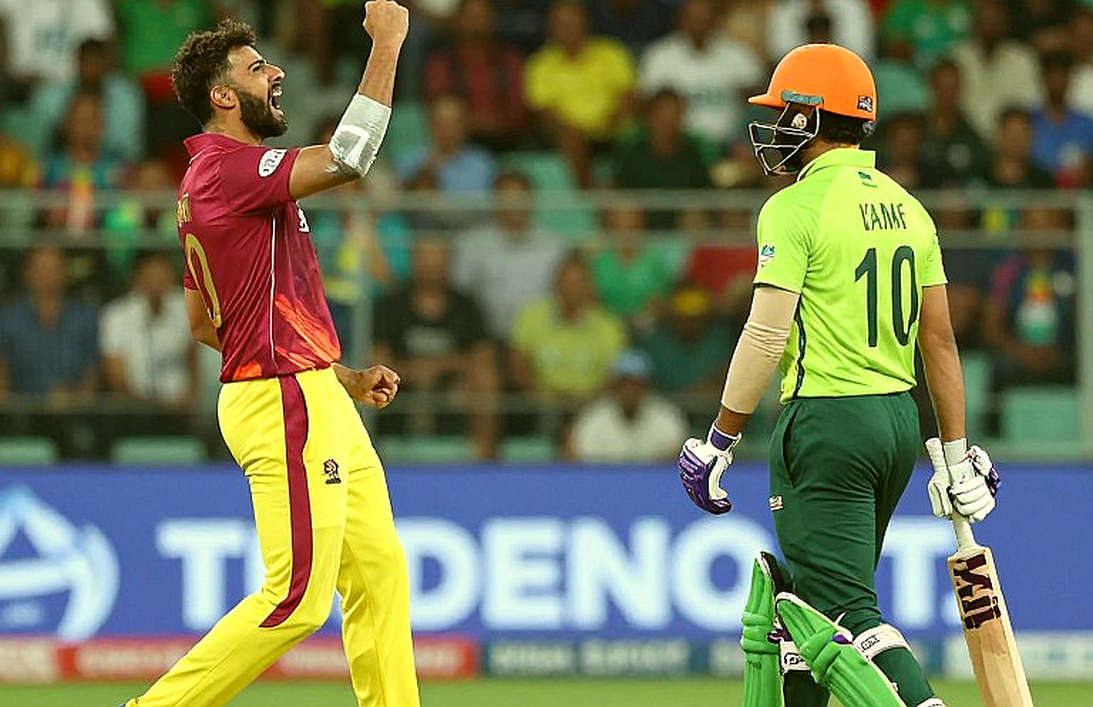
Every match is in Faisalabad. Three venues — Bohranwali Ground, Jawad Club Ground, and the final at Iqbal Stadium. This is the tournament's strongest design decision, though some might wrongly call it a limitation.
Think about it: if five teams played in five different cities, three variables would enter — home advantage, travel fatigue, and home crowds. Who lives where, who spends how many hours on a bus, whose supporters are louder — these would influence results without adding anything to the quality of cricket. Playing everything in one city removes those three variables. Five teams in the same environment, same air, same pitch. In domestic women's cricket, that cleansing is no small thing.
From Khulna, covering tournaments at a distance, I have seen a pattern repeat: where venues are scattered, results invite questions. Who travelled, who did not. In Faisalabad that gap is absent. But a hidden detail is attached. Club grounds — Bohranwali and Jawad Club — likely offer less pace and bounce than Iqbal Stadium. This is not stated; it is an inference, though club cricket's reality is often exactly this. And how much the ball turns on those pitches will decide whether the tournament's character is spin-led.
Three, Day Matches: No Dew, So the Calculation Changes
A 10 a.m. match, a 9:30 toss. Every game in daylight. This single decision alters the entire technical character of the tournament.
In evening T20s, dew is a silent captain. A team batting second knows that once the ball is wet, spinners are neutralised and catches slip, so it plans its batting around dew's arrival. In a day match that captain is absent. Here, the team batting first need not fear dew, and the team batting second cannot assume dew will help it. To grasp how large this shift is, one line suffices — many domestic tournaments' entire toss strategy rests on dew, and here that whole chapter is cut.
Yet one uncertainty clings to the tournament that no one has voiced. Mid-October in Punjab can carry the tail of the monsoon. The last wet days of the rains often land in early October. The source makes no weather mention, so this is only a possible risk. But if rain falls on club grounds, the whole calculation flips — because there is usually no DLS or full DRS setup there, and a wet club pitch becomes an easy reason to abandon a match.
Four, The Captains: Four Different Roles, One Shared Trait
The source names four captains, and this list itself demands analysis. Tuba Hassan — Stars captain, leg-spinner, continuing to lead the defending champions. Gull Feroza — Invincibles captain, right-handed opening batter. Ayesha Zafar — Challengers captain, middle-order batter. Muneeba Ali — Conquerors captain, wicket-keeper batter.
One thing must be said at once: the source gives roles but no performance data for any of them. No average, no strike rate, no economy, no form signal. So I will make no quantitative claim about how well any of these four will play. Where there is no data, comment becomes guesswork, and passing guesswork off as analysis is not my job.
What can be said is structural. The four captains' roles are spread across four different phases — spin bowling, opening, middle-order, and keeping. If all four captains shared one role, the tournament's tactical variety would shrink; here it has not. A spin captain tends to manage bowling changes and field settings more aggressively through the middle overs. For Tuba Hassan that would be tactically coherent if the club pitches offer some turn. But that is a low-confidence inference, because the pitch character is unconfirmed.
Five, Squads and Pipeline: Seventy-Five Cricketers, Six Arriving Late
Five teams, fifteen-player squads each — seventy-five cricketers in total. The number may seem small, but it is the tournament's most significant statistic. It shows how many players genuinely get a competitive opportunity at this tier of Pakistan's women's domestic cricket.
But a subtle complication exists, and it must be kept in mind when reading results. In the same city, the Pakistan U19 Women's Tri-Series runs in parallel. Six players from that tri-series will feature in this domestic tournament, but only after the tri-series ends will they join their teams. That means the opening rounds are not played at full strength.
This one fact changes how the whole tournament should be read. Suppose a team loses its first two matches. Normally that signals poor form. But if two or three of its key players are still busy in the tri-series, those two defeats do not reflect the team's true strength. This is exactly why I would not judge first-round results heavily. The real picture emerges after the six return, in the rounds following the tri-series.
One more angle is worth noting. If those six concentrate in one or two teams, competitive balance may temporarily break. Those teams will look weak first, then suddenly strong. That is not a design flaw, it is a schedule consequence. But an analyst who looks only at the points table will miss this subtle shift.
Six, Prize Money: Three Million Rupees, and a Top-Heavy Split
Here comes the only hard commercial fact in the entire source. The total prize pool exceeds three million rupees. The champion takes one and a half million rupees; the runner-up takes one million.
Run the arithmetic once. Of a total pool above three million rupees, two and a half million goes to just two teams. The remaining three teams share less than half a million rupees. This is a top-heavy distribution. There is an argument for it — the designer may want to raise league-phase intensity so that only the best two are paid. But there is a cost. For the bottom three teams the reward is so small that it becomes symbolic rather than professional motivation.
I will not over-claim on this figure. The source gives no match fees, no contract data, no sponsorship. What is here is a limited but honest picture — this is a development-tier tournament, not a commercial product. And that is consistent with its purpose. To reach any conclusion about commercial strength, the things needed — broadcast value, team ownership, player income — are all absent. So I stop here.
Seven, Broadcast: The Missing Data Point Speaks Loudest
The source contains not a single word about broadcast or streaming. This is no accident. Day matches at club grounds, with no media-rights announcement, together suggest the matches will either not be televised or streamed only minimally.
Here one thought keeps circling in my head. I have seen the story of unbroadcast women's domestic cricket before, not only in Pakistan but across South Asia. Players play, audiences never know, the match ends, and no one remembers anything. This is not merely a lack of traffic; it is a lack of memory. A match no one watches never enters an archive.
Eight, Risk: Operationally Calm, Structurally Fragile
Overall, the risk level is low to moderate. The tournament is simple, single-city, board-run, so operationally calm. But three structural weaknesses are clear.
First, player availability. A schedule parallel to the U19 tri-series means not every team is at full strength in the opening rounds. Second, schedule density. Roughly twenty-one matches in about ten to thirteen days, in parallel across two grounds. That is physically demanding on fifteen-player squads. Third, commercial fragility. Low prize money and an unclear revenue source. None of these is a high-severity crisis, but together they say how firmly the tournament stands on its own feet.
Contrarian: What Everyone Will Misread
Here I want to say one thing plainly, because from the outside a simple mistake has been made about this tournament.
To an outside eye this may look like a small, low-value, little-discussed domestic women's event. And from that view a conclusion is drawn — this is nothing big. But I would say that reading is entirely wrong. If we measure a tournament's worth only by its prize money or broadcast deal, we miss something large. This tournament's real asset is its pipeline. Six U19 players are entering this senior domestic tournament directly. What this one mechanism does, no broadcast deal can — it builds a bridge between senior and junior tiers.
There is another contrarian point, easily missed when looking at the trophy and the top-heavy prize money. Everyone assumes competition means producing a champion. But the real benefit of this double round-robin format is not for the champion, but for the players lower down. Eight matches mean eight chances for a young player to show herself. In a knockout, two defeats would end that chance. The round-robin is therefore the tournament's silent asset.
And there is an uncomfortable truth here that I will not skip. The top-heavy prize money and the silence on broadcast together send a message — those who lose matter less financially. This is not a rule breach; it is a choice. But that choice has a long-term consequence. For the three teams playing almost without reward, how much appetite to invest will remain? The answer to that question arrives not today, but in two or three years.
Takeaway: What to Watch After October 25
The Khulna screen flickered, and a byline started breathing — that habit taught me that even when a match ends, the story does not. This tournament's story will not end at the October 25 final either.
I built an empty-stadium archive from a bedroom, one silent roar at a time — and that habit tells me what to watch here is not the trophy. Watch which team's form suddenly changes once the six U19 players return after the tri-series. Watch whether the club pitches lean toward spinners or stay batting-friendly. Watch whether rain cuts a match short. And most of all, watch whether Stars and Invincibles again finish in the top two, or whether a team overtakes them through the net run-rate game in the league phase.
At 4 a.m., Eriksen — that night taught me that community reaction comes first, tactics after. It is the same here in Faisalabad. The question is not who wins the trophy. The question is this — on the evening of October 25, when the final ends, how many will remember that twenty-one matches were played, that seventy-five cricketers took the field, and that six rising players tasted senior domestic cricket for the first time. If that number is remembered, this small tournament becomes something big. And if it is not, the biggest fact of all is lost — and that is bigger than the trophy.