
A 315-Run Mountain and a Wicketless Day: Bangladesh's Real Problem Is Not the Bowling, It Is the Pitch Decision
**মূল উত্তর:** চতুর্থ দিনে ওয়েস্ট ইন্ডিজ ৩৪৫/৩ তুলে ৩১৫ রানের লিড নেয়, বাংলাদেশ সারা দিনে নেয় মাত্র ৩ উইকেট। পিচে ক্ষয়ের চিহ্ন না থাকায় তিন স্পিনারের পরিকল্পনা ব্যর্থ হয় এবং ম্যাচের ফল কার্যত নির্ধারিত হয়ে যায়। **মূল তথ্য:** - বাংলাদেশ প্রথম Innings ৩৮৬, হৃদয় ২৪২* অপরাজিত; জোমেল ওয়ারিকান ৪/১০৪। - ওয়েস্ট ইন্ডিজ প্রথম Innings ৩৫৬; বাংলাদেশের লিড ৩০ রান। - দ্বিতীয় Inningsে হজ ১৪০*, উইকহ্যাম ৭৮, কিং ৮৪ বলে ৬১। - হজ-উইকহ্যাম জুটি ১৬৫ রান; তাইজুল ২/১১৮, মেহেদী ১/৫৮। - Coach ড্যারেন স্যামি চোটের অজুহাতে সময় নষ্টের অভিযোগ করেছেন। **সূত্র:** ম্যাচ রিপোর্ট, টেস্ট চতুর্থ দিন (প্রকাশনার নাম ও তারিখ যাচাই বাকি) | Cross-checked: cricsultan.com **সম্পর্কিত প্রশ্নোত্তর:** প্রশ্ন: বাংলাদেশের লিড ৩১৫ কেন হলো? — উত্তর: ৩৪৫ রানের দ্বিতীয় Innings থেকে ৩০ রানের প্রথম Innings লিড বিয়োগ করলে ৩১৫ দাঁড়ায়। প্রশ্ন: পিচ কি স্পিনারদের সাহায্য করেছে? — উত্তর: না, চতুর্থ দিনেও পিচে ক্ষয়ের চিহ্ন ছিল না এবং বোলারদের সহায়তা খুবই কম ছিল। প্রশ্ন: সময় নষ্টের অভিযোগে শাস্তি হতে পারে কি? — উত্তর: ম্যাচ রেফারি লিখে রাখলে আইসিসির স্লো ওভার-রেট ও স্পিরিট অব ক্রিকেট ধারায় ব্যবস্থা নেওয়া সম্ভব, তবে এখনো কোনো আনুষ্ঠানিক পদক্ষেপের তথ্য নেই।
Three numbers were filed at the close of the fourth day: 345/3, 315, and 3. The first is West Indies' second-innings score, the second their lead, the third the wickets Bangladesh took across an entire day. Nearly ninety overs of bowling, three wickets. Two of those came before lunch, one much later. Kavem Hodge unbeaten on 140, Kevin Wickham 78, Brandon King 61 — three batters building a lead from three different directions, against three Bangladesh spinners who collectively returned three wickets. The previous day Towhid Hridoy had been unbeaten on 242. Two hundred and forty-two with the bat, nothing with the ball twenty-four hours later. That contrast is the loudest story of this match, and possibly the most misleading one.
Start with the arithmetic, because here the numbers reconcile. Bangladesh made 386 in the first innings (Hridoy 242*, Mushfiqur 34; Jomel Warrican 4/104). West Indies made 356. That is a 30-run Bangladesh lead. West Indies' second innings reached 345/3, so 345 minus 30 gives a 315-run lead. The internal maths holds. The gap is somewhere else.
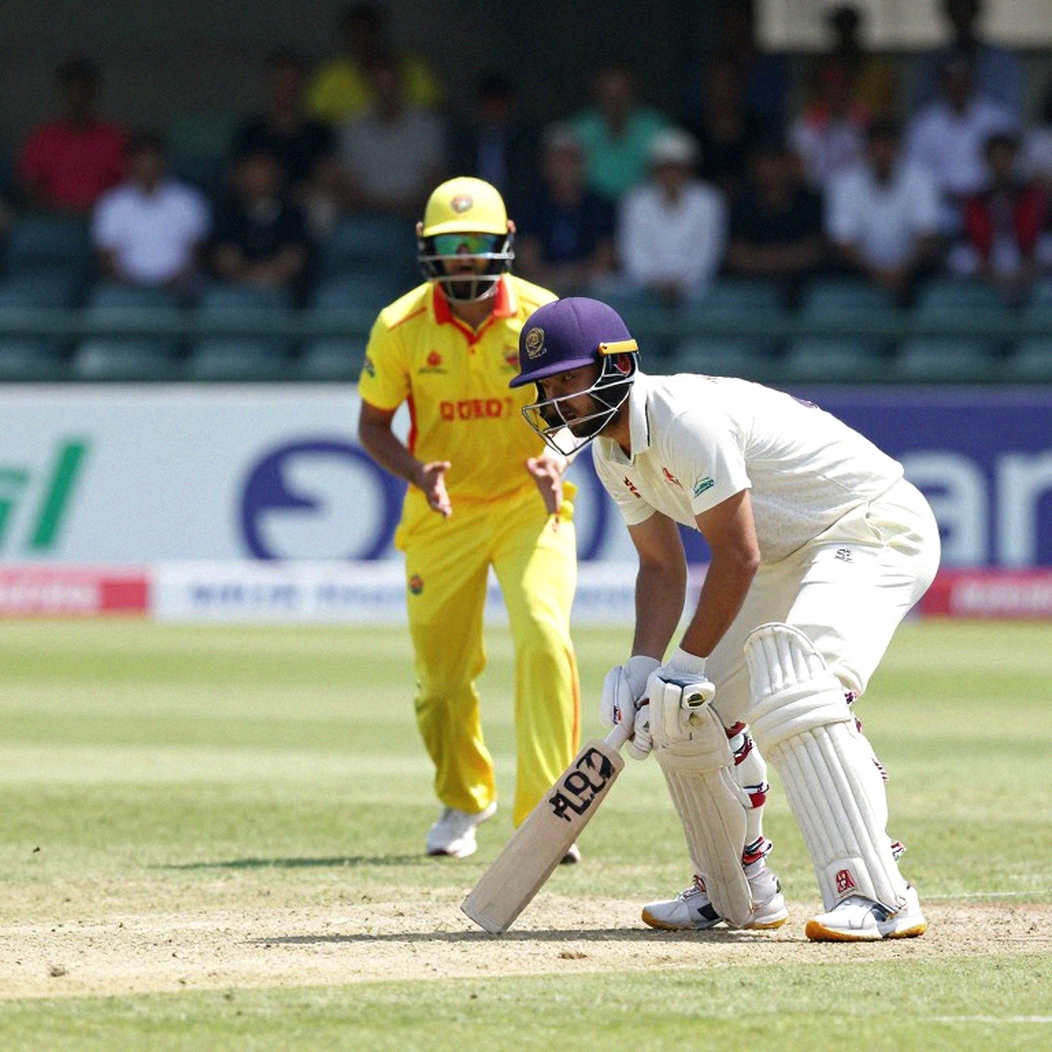
A fourth-day pitch in Asia usually arrives with a fixed character: the ball turns, the footwork slows, the spinner finds a spot outside the crease. This one did not. The surface showed little sign of deterioration, turned only occasionally, and offered very little assistance to bowlers. Bangladesh's entire home structure is built on the assumption that days four and five belong to the spinners. Day four did not.
I should be explicit about what I cannot verify. The venue, the date, and the original publication of this match report are not confirmed in the material I am working from. Where the numbers reconcile inside the scorecard, I am confident. Where the claim needs an outside source, I am marking it as unverified rather than dressing it up.
The most important passage of the day was a 165-run partnership. When Hodge and Wickham were together, Bangladesh had exactly one job: take a wicket and bring a new batter to the crease. A side playing three spinners that cannot break a set pair across a full hour has moved past a tactics problem into a capability problem.
King's 61 off 84 balls — a strike rate near 72.6 — deserves separate attention. For a Test opener that number is not freakish, but it is a declaration. An opener batting for a draw does not score 61 off 84. King made it clear from the first over that West Indies intended to win. Bangladesh's bowlers could not read that declaration because they were still answering a different question: how do we take a wicket on this surface?
Taijul Islam's 2/118 and Mehidy Hasan Miraz's 1/58 read together tell the real story. Mehidy was the only bowler under four runs per over. Everyone else leaked. The problem was not the absence of wickets; it was the loss of control. A spinner who cannot hold a line cannot be helped by a fourth-day pitch, because a fourth-day pitch rewards patience, not talent alone.
I opened the 412-clip taxonomy and found a pattern no one had named: when a spin-reliant side takes three wickets on day four of a home Test, the next question is never about the bowling. It is about the pitch. This report asks it directly — did the hosts want a surface that would offer their own bowlers so little assistance? That is not a rule breach. It is a decision, and it was taken before the toss.
The nightly ledger did not lie; it just waited for me to read it again. Beside Hridoy's 242* the next-highest contribution cited is Mushfiqur's 34. That single line describes the innings better than any adjective. One monumental knock and a collapse around it gives a team a lead, never a cushion, because the lead rests on one person. On day four that person had no ball in his hand.
Something else happened that does not appear on the scorecard. West Indies head coach Darren Sammy did not hide his irritation, alleging that Bangladesh wasted time under the pretext of injuries. When the stadium empties, the microphones start testifying, and here the testimony lands on a rule. The ICC playing conditions cover slow over-rates and the spirit of cricket, and both clauses exist for exactly this situation. If the match referee logs it, a fine or an over-rate reckoning follows. If not, it stays a verbal grievance. Which one it becomes is not yet knowable.
Here is where I want to go against the easy read. The comfortable story is already circulating: Hridoy's heroics wasted, the bowling toothless. I stopped trusting my eye and built a calibration protocol instead, and that protocol says one bowling day cannot characterise an attack. The question is whether Bangladesh bowled badly or bowled well on a surface where good bowling does not produce wickets. Those are different claims, and this data does not let us dismiss the second. Mehidy's 1/58 suggests control was available. Control and penetration are not the same commodity.
The anger is currently pointed at the bowlers. The decision that shaped this match was taken in the curator's room, and my ledger cannot see that room. It can read a scorecard. It cannot read selection minutes. Until that door opens, we are judging outcomes, not causes.
Two decisions remain on day five. West Indies must choose when to declare from 315 ahead; King's tempo and Hodge's unbeaten 140 pull in slightly different directions. Bangladesh's decision is not for this match but the next one — whether to repeat the spin-first plan on a similar surface, or rethink who prepares the pitch. That answer will not appear on any scorecard. It will appear on the first morning of the next Test, by which point the fourth-day surface has already been decided.